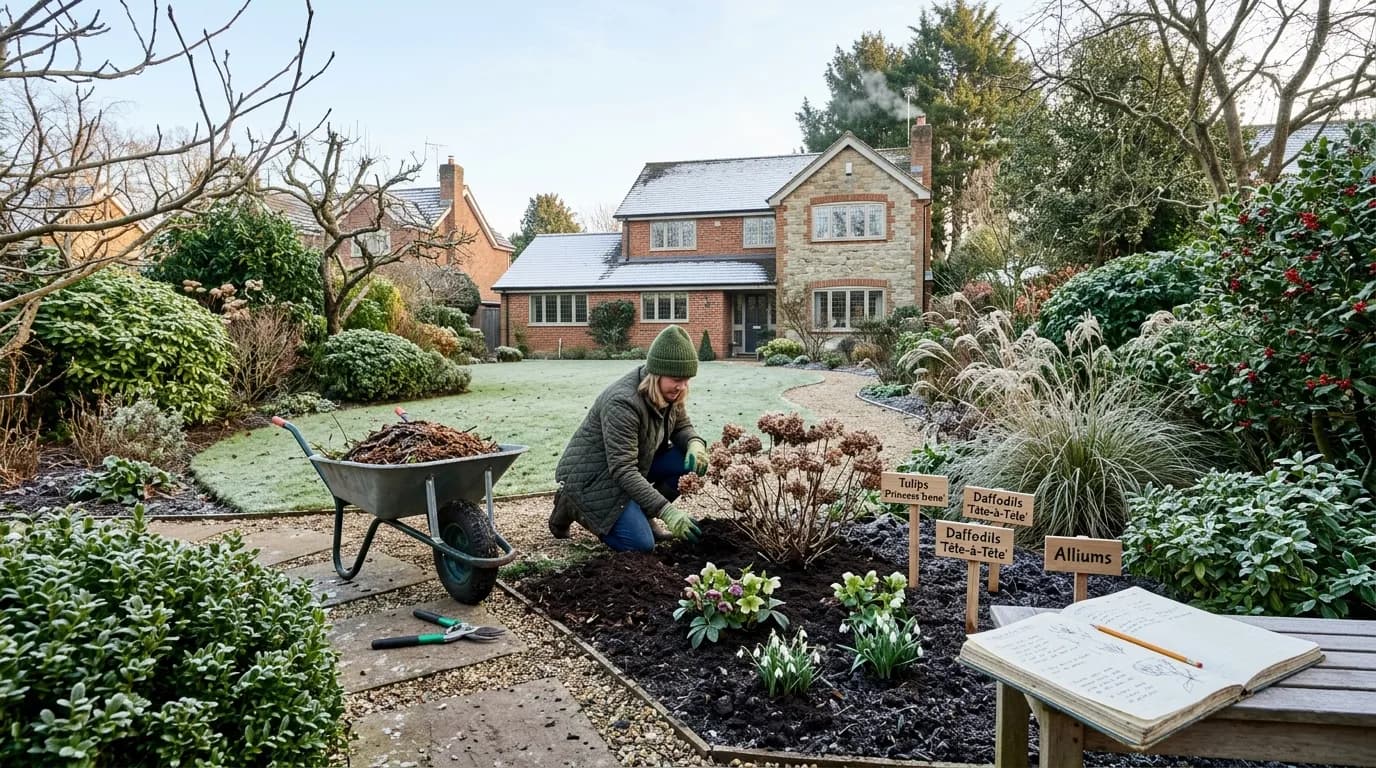
Most people think gardening stops in winter. Smart gardeners know winter is when the magic happens — because every great garden starts with a great plan.
December: Design & Dream
Week 1–2: Review This Year
Before planning next year, assess what worked and what didn't:
- What bloomed when? Note gaps in your seasonal color calendar
- What died? Wrong plant, wrong place, or bad luck?
- What grew too big? Needs division or relocation in spring
- What did you wish you had? Write it down now while you remember
Week 3–4: Create Your Plan
This is when you should design your landscape for next year. With no leaves on deciduous plants, you can see the "bones" of your garden — structure, sight lines, gaps.
Planning checklist:
- [ ] Sketch your current layout
- [ ] Identify areas that need work
- [ ] Research plants for problem areas
- [ ] Set a realistic budget
- [ ] Order catalogs or browse online nurseries
January: Order & Prepare
Seed Starting
Many plants need 8–12 weeks of indoor growing before transplanting. January is seed-starting month for:
- Tomatoes — Start 6–8 weeks before last frost
- Peppers — Start 8–10 weeks before last frost
- Herbs (basil, parsley, oregano) — Start 6–8 weeks before last frost
- Annual flowers (petunias, marigolds, zinnias) — Start 6–8 weeks before last frost
Bare Root Orders
January is when nurseries ship bare root plants — trees, shrubs, and perennials shipped dormant without soil. They're:
- 50–70% cheaper than potted plants
- Establish faster (roots grow directly into native soil)
- Only available January–March
Order now: Fruit trees, roses, berry bushes, shade trees, ornamental trees
Tool Maintenance
- Sharpen pruning shears, loppers, and mower blades
- Clean and oil hand tools
- Service the lawn mower (oil, spark plug, air filter)
- Inventory supplies (mulch, compost, fertilizer)
February: Start Working
Pruning Season
February is ideal for pruning most deciduous trees and shrubs because:
- The plant is dormant (minimizes stress)
- No leaves means you can see the structure clearly
- Wounds heal when growth resumes in spring
Prune in February:
- Shade trees (remove dead, crossing, or rubbing branches)
- Summer-flowering shrubs (hydrangea paniculata, butterfly bush, crape myrtle)
- Fruit trees (apples, pears, peaches)
- Ornamental grasses (cut to 6" above ground before new growth)
DO NOT prune in February:
- Spring-flowering shrubs (azalea, lilac, forsythia, rhododendron) — they bloom on last year's wood. Prune after they flower.
- Maple, birch, walnut — they'll bleed sap if pruned before full leaf-out
Soil Prep
As soon as the ground thaws enough to work:
- 1Test your soil (pH, nutrients, texture)
- 2Add amendments based on test results
- 3Spread 2–3 inches of compost on beds
- 4Turn it into the top 6–8 inches with a garden fork
Bed Cleanup
- Remove last year's dead plant material
- Pull winter weeds (they're small and easy now)
- Check perennial crowns for signs of life
- Remove old mulch from beds (it may harbor disease)
Winter Tasks by Zone
Zones 2–4 (Cold North)
- Focus on indoor seed starting
- Plan and order — ground is frozen until April
- Protect marginally hardy plants with mulch blankets
- Prune fruit trees on warm days above 20°F
Zones 5–6 (Temperate)
- Start seeds indoors January–February
- Prune deciduous trees and shrubs February
- Begin bed cleanup late February
- Divide perennials if ground is workable
Zones 7–8 (Mild South)
- Plant cool-season vegetables (lettuce, spinach, peas) in January
- Prune roses in February
- Begin planting trees and shrubs
- Overseed warm-season lawns with winter rye
Zones 9–11 (Warm/Tropical)
- Plant tropical plants year-round
- This is dry season — focus on irrigation
- Prune and shape hedges
- Plant spring-blooming bulbs
The Planning Advantage
Gardeners who plan in winter report:
- 30% less plant mortality (right plant, right place decisions made without impulse buying)
- 40% lower costs (bare root plants + planned purchases vs. impulse buys at garden center)
- 60% less spring overwhelm (the plan is ready, just execute)
- More seasonal interest (planned for year-round color, not just spring)
Indoor Projects for Gardeners
- Start a seed collection — Label and organize seeds in a cool, dry box
- Build a grow light setup — 2 shop lights with 6500K bulbs, $30 total
- Read — "The Well-Tempered Garden" by Christopher Lloyd, "Planting: A New Perspective" by Piet Oudolf
- Design your garden — Use Yardcast to generate professional landscape designs while you wait for spring
Don't wait until April to think about your garden. Start your design now and be ready to hit the ground running.