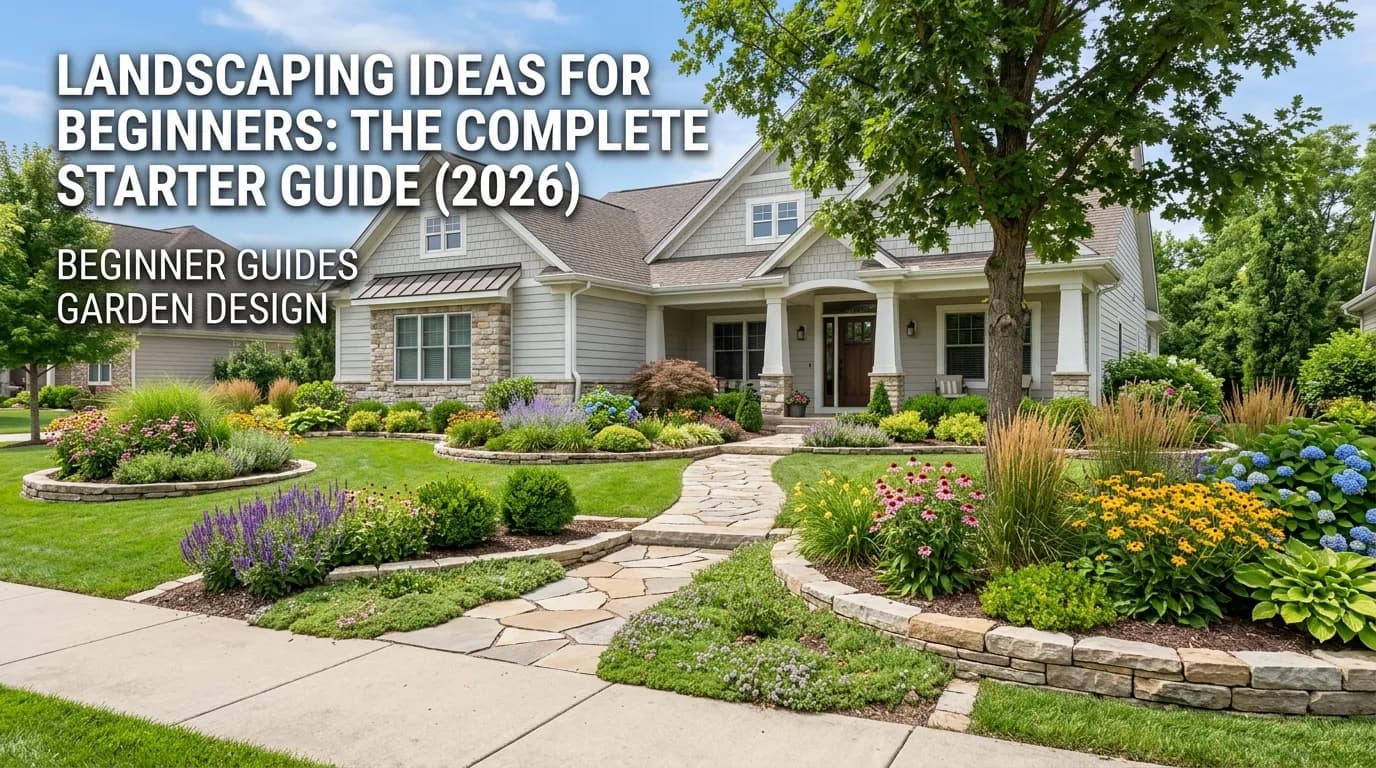
Starting your first landscaping project can feel overwhelming. You're staring at a blank (or overgrown) yard, surrounded by a million choices: plants, hardscape, layout, budget. Where do you even begin?
This guide is everything you need to start landscaping with confidence — covering 30 beginner-friendly ideas, the tools you actually need, which plants never fail, how to plan a layout, and how to avoid the mistakes that cost most beginners hundreds of dollars. Let's dig in.
Why Landscaping Matters More Than You Think
Before diving into ideas, here's the motivation to take action: quality landscaping adds 10–15% to your home's value (National Association of Realtors). It reduces your energy bills (strategic shade can cut cooling costs by 25%), improves mental health, and transforms how your home looks and feels every single day.
And the best part? Even small, beginner-level changes make a dramatic difference. You don't need a designer's budget or a horticultural degree.
Start Here: The 4 Rules of Beginner Landscaping
Before touching a shovel, internalize these four rules:
Rule 1: Design before you plant. Walk your yard in the morning and afternoon. Notice where sunlight falls. Note where water pools after rain. Sketch a rough map. This 20-minute investment prevents expensive replanting mistakes.
Rule 2: Start small and expand. Pick one zone — front walkway, a corner bed, a patio border — and nail it before moving on. Beginners who try to tackle the whole yard get overwhelmed and quit.
Rule 3: Match plants to your conditions, not your wishlist. A plant that needs full sun planted in shade dies, no matter how much you love it. Learn your USDA hardiness zone, your sun exposure, and your soil type first.
Rule 4: Use the 3-layer rule. Every planting looks better with three height layers: tall background plants, medium middle plants, and low ground-level plants or ground cover. This is the secret behind every professionally landscaped yard.
30 Landscaping Ideas for Beginners
Front Yard Basics
1. Plant a single statement shrub. One well-placed shrub near your front door (knockout rose, boxwood, or little lime hydrangea) instantly elevates curb appeal. Total cost: $15–$40.
2. Line the walkway with low plants. Lavender, creeping phlox, or dwarf mondo grass on both sides of your front walk creates a polished, intentional look with minimal effort.
3. Add mulch to existing beds. This is the single highest ROI task in beginner landscaping. A $40 mulch job makes an overgrown bed look cared-for overnight.
4. Install a metal edging border. Steel landscape edging separates lawn from beds with a crisp, professional line. It takes two hours to install and lasts decades.
5. Plant tulip and daffodil bulbs in fall. Fall-planted bulbs are beginner-proof: drop them in the ground 6 inches deep, forget about them, and watch spring color appear. No experience needed.
6. Trim shrubs into clean shapes. Overgrown shrubs make a yard look abandoned. A $25 hedge trimmer and one afternoon turn chaos into structure.
7. Replace dying grass with ground cover. Struggling lawn patches under trees? Replace with pachysandra, liriope, or hostas — shade-tolerant ground covers that spread on their own.
Ready to see these ideas on YOUR yard? Generate a free AI landscape preview at Yardcast → Upload your yard photo and get 3 photorealistic designs in under 60 seconds.
Backyard Beginner Ideas
8. Define a patio zone. Even without a permanent patio, outlining a 10×12-foot zone with pea gravel ($150) or simple stepping stones creates an "outdoor room" that makes the whole yard feel intentional.
9. Plant a simple privacy hedge. Arborvitae 'Green Giant' is the beginner's hedge: fast-growing (3–5 ft/year), deer-resistant, and extremely low maintenance. Plant 4–5 feet apart and they form a solid screen in 3–4 years.
10. Build a simple raised garden bed. A 4×8-foot cedar raised bed is the most satisfying beginner project. It costs $80–$150, takes one afternoon, and gives you complete control over your soil quality.
11. Add pathway stepping stones. Large flagstones set in grass — no mortar, no foundation — create beautiful paths in 2 hours. Move them later if you want to.
12. Plant native perennials. Coneflowers (echinacea), black-eyed Susans, and bee balm come back bigger every year, never need staking, and attract pollinators. Plant once, enjoy forever.
13. Install one statement planter. A large (18"+) ceramic or metal planter filled with a "thriller-filler-spiller" combination (tall spike → coleus → trailing sweet potato vine) adds instant color and style to any patio.
14. Hang string lights. Technically not "landscaping" but it transforms how a backyard feels after dark. Zigzag them between trees or a pergola. Under $50.
15. Set up a birdbath or small water feature. Moving water attracts birds and creates ambient sound. A solar-powered fountain in a simple bowl requires no wiring and costs $30–$80.
Plant Selection for Beginners
16. Start with plants rated "easy" or "tough as nails." For sun: knockout roses, ornamental grasses, daylilies, lavender, black-eyed Susans. For shade: hostas, ferns, astilbe, coral bells. These are the plants landscape designers use when they want guaranteed results.
17. Choose native plants wherever possible. Native plants evolved to thrive in your region — they need less water, no fertilizer once established, and rarely get pest problems. Use the Yardcast plant search or the Lady Bird Johnson Wildflower Center's native plant database to find your region's best natives.
18. Follow the "right plant, right place" rule. Before buying anything, look at the care tag and confirm: sun/shade requirement, mature size, hardiness zone. A plant that fits its spot will thrive with minimal care. One that doesn't will struggle forever.
19. Buy small and let plants grow. A 1-gallon perennial planted now is indistinguishable from a 3-gallon plant in 2 years — but costs 60% less. Beginners overspend on large plants. Patience pays.
20. Plant in odd numbers. Three of the same plant always looks more natural than two or four. Five of one variety creates an impact. This is the simplest design rule that makes beginner plantings look professional.
Layout and Design for Beginners
21. Start with a simple sketch. You don't need CAD software. A hand-drawn sketch on graph paper (1 square = 1 foot) helps you visualize spacing, paths, and bed shapes before spending anything.
22. Use curves, not straight lines, in planting beds. Curved bed edges look more natural and organic. Create curves with a garden hose or rope before cutting — live with the shape for a day before committing.
23. Create a focal point in every view. Every sightline from your home should end on something interesting: a specimen tree, a bench, a sculpture, a bold planter. Focal points are what separate designed spaces from random plantings.
24. Repeat elements for unity. Use the same plant, pot color, or material in at least 3 spots across your yard. Repetition creates visual cohesion. Random variety creates chaos.
25. Leave room for growth. Beginner mistake: planting at the final size you want now. That beautiful 3-foot hydrangea becomes 5 feet wide. Space plants at 75% of their mature spread and they'll fill in beautifully in 2–3 years.
Quick Weekend Projects
26. Power wash everything. Your driveway, patio, and front walkway are probably gray-brown with dirt and algae. A $60 pressure washer rental reveals the clean concrete underneath. This alone makes a house look new.
27. Paint your front door. Not a plant, but part of the curb appeal picture. Bold colors (black, deep red, navy blue) against white or gray siding dramatically boost visual impact.
28. Install solar pathway lights. No wiring, instant results. Stake lights along your front walkway — they charge during the day and light automatically at dusk. Aesthetically clean modern styles run $30–$60 for a pack of 6.
29. Replace mailbox landscaping. The mailbox area is ugly on most homes. A simple planting of ornamental grasses, rudbeckia, or a small ornamental shrub (Knock Out rose, spirea) around the base takes 30 minutes and makes a disproportionate visual impact.
30. Build a compost bin. Even beginners should start composting. A simple 3-pallet bin (free) or plastic composter ($30) turns kitchen scraps into free soil amendment. Better soil = less fertilizer = better plants = lower costs.
The 5 Tools Every Beginner Needs
You don't need an elaborate tool collection. These five are all you need to start:
| Tool | Why You Need It | Approximate Cost |
|---|---|---|
| Digging spade | Cutting bed edges, planting | $25–$50 |
| Hand trowel | Planting smaller plants/bulbs | $10–$20 |
| Garden fork | Turning soil, dividing perennials | $25–$45 |
| Hori hori knife | The most useful single garden tool — digs, cuts, divides | $25–$45 |
| Garden hose with adjustable nozzle | Watering newly planted beds | $20–$40 |
Total investment: $105–$200. Buy quality tools once — cheap tools break on the first hard soil. Corona, Fiskars, and Bully Tools all make excellent beginner-level quality at fair prices.
Common Beginner Landscaping Mistakes (and How to Avoid Them)
Planting too close to the house. Shrubs need air circulation and room to grow. Keep plants at least 3 feet from foundations (more for large shrubs).
Ignoring soil prep. Most native soil is too compacted for new plantings. Add 2–3 inches of compost before planting and mix it into the top 8 inches. This one step doubles plant establishment speed.
Overwatering new plants. More new plants die from overwatering than underwatering. After planting, water deeply every 2–3 days for the first month, then taper to weekly. Stick your finger 2 inches into the soil — only water when it's dry.
Planting annuals when perennials serve you better. Annuals need replanting every year. Perennials come back bigger every spring. Build your bones with perennials, then use a few annuals for seasonal color.
Skipping the plan. Most expensive beginner mistake: buying plants at the nursery without a plan and planting them randomly. The result looks cluttered, requires constant rearranging, and wastes money. Always know where a plant goes before you buy it.
How to Design Your Yard Before You Plant Anything
The fastest way to visualize your landscaping ideas is to see them applied to photos of your actual yard. [Yardcast's free AI landscape design tool](/redesign) does exactly this:
- 1Upload photos of your yard (front or back)
- 2Choose your preferred style (modern, cottage, farmhouse, tropical, etc.)
- 3Select features you want (lawn, garden beds, patio, privacy hedges, water features)
- 4AI generates 3 photorealistic designs overlaid on your actual yard in 60 seconds
- 5Preview all 3 designs completely free — then download the full plant list and design plan for $29
The 44-page plan includes plant quantities, spacing instructions, estimated costs, and contractor notes so you can build your design yourself or hand it to a landscaper.
[Generate your free beginner landscape design →](/redesign)
No experience, no design skills, no expensive consultation required. Just your yard photos and 60 seconds.
Beginner Landscaping Budget Breakdown
Not sure what to budget? Here's a realistic breakdown by project type:
| Project | DIY Cost | Impact Level |
|---|---|---|
| Mulch all beds | $40–$120 | ⭐⭐⭐⭐⭐ High |
| Install metal edging | $60–$120 | ⭐⭐⭐⭐ High |
| Walkway plantings | $80–$200 | ⭐⭐⭐⭐⭐ Very High |
| Raised garden bed | $80–$150 | ⭐⭐⭐ Medium |
| Privacy arborvitae (×5) | $150–$300 | ⭐⭐⭐⭐ High |
| Pea gravel patio zone | $120–$250 | ⭐⭐⭐⭐ High |
| Native perennial bed | $100–$300 | ⭐⭐⭐⭐⭐ Very High |
| Full front yard refresh | $500–$1,500 | ⭐⭐⭐⭐⭐ Transformative |
Beginner sweet spot: A $300–$500 investment in the right places (front walkway planting, fresh mulch, metal edging, pathway lights) produces a transformation that looks like $3,000 of professional work.
Start This Weekend
Here's a one-weekend beginner landscaping action plan:
Saturday morning (3 hours): Walk your yard and sketch a simple plan. Take photos from the street, from the back door, from each corner. Note sun/shade, drainage problems, eyesores.
Saturday afternoon (2 hours): Plan your first zone. Use Yardcast's free tool to upload photos and generate 3 design options to see what's possible.
Sunday (full day): Execute one project: install edging, plant the walkway border, add mulch, or build the raised bed. Finish one thing completely before starting the next.
The transformation happens one zone at a time. Every experienced landscaper started exactly where you are — with a blank yard, a few ideas, and the willingness to start digging.
[Design your yard now — free preview at Yardcast →](/redesign)