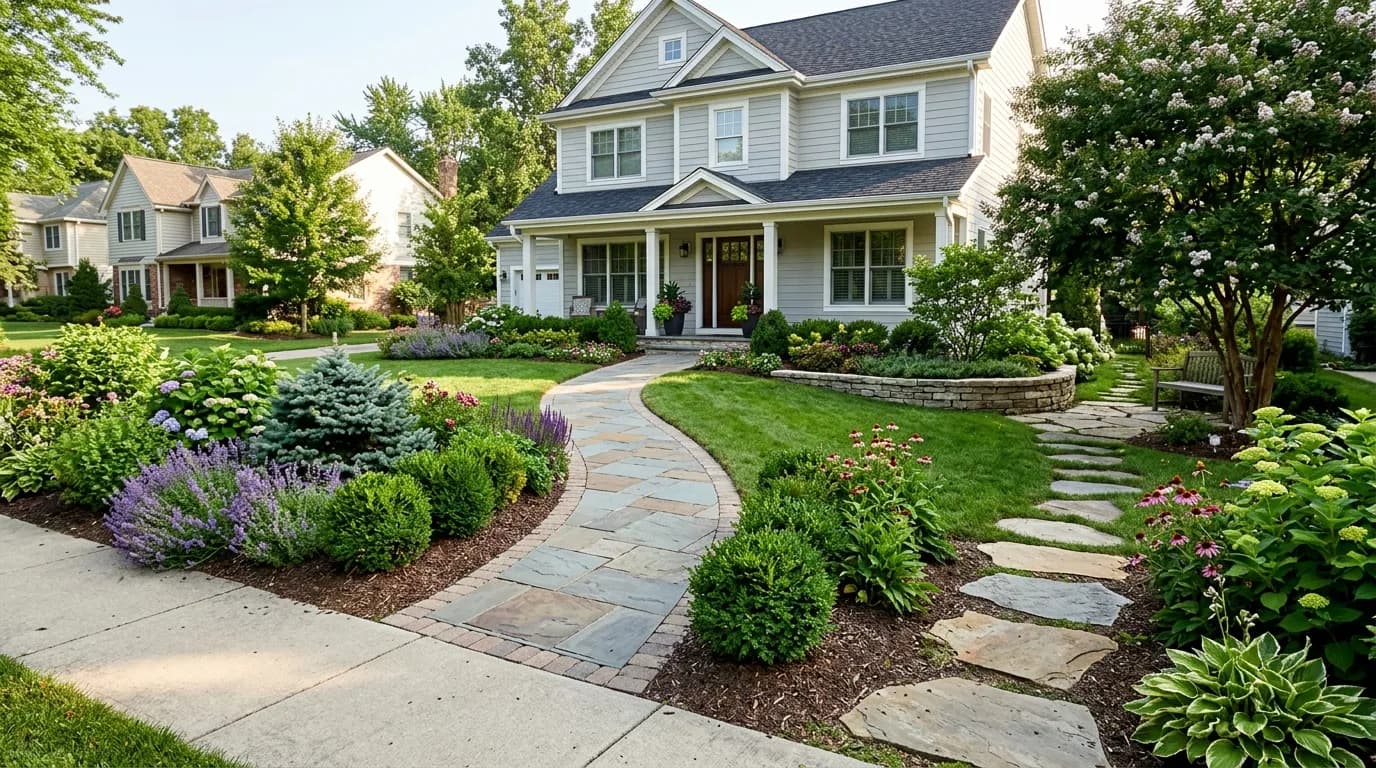
The walkway from the street to your front door is the most-used feature in your entire yard — and it's almost always an afterthought. Most homes have a basic concrete path that's perfectly functional and completely uninspiring. The good news: upgrading a front walkway is one of the highest-ROI landscape projects you can do, with strong visual impact relative to cost.
Whether you're replacing an existing path, adding a secondary garden path, or designing from scratch, this guide covers 25 front yard walkway ideas with materials, dimensions, plants, and realistic cost expectations.
Why Your Walkway Matters More Than You Think
The front walkway is functional, yes — but it's also the primary design element of your front yard. It establishes the geometry. It creates the view line from the street. It signals the style of the home before anyone even reaches the door. A wide, well-edged bluestone path with proper lighting and flanking plantings announces confidence and care. A narrow crumbling concrete strip with overgrown grass edges announces neglect.
Even a $2,000–$4,000 walkway renovation delivers outsized curb appeal returns because it defines the entire experience of approaching the home.
Walkway Materials: Choosing What's Right for Your Home
Concrete and Concrete Pavers
1. Stamped Concrete Walkway
Stamped concrete gives you the look of stone or brick at a lower cost. Popular patterns include cobblestone, flagstone, and large tile. The downside: stamped concrete requires resealing every 2–3 years, can crack in freeze-thaw climates, and if a section cracks it's difficult to match the original stamp pattern.
Cost: $12–$18/sq ft installed. A typical 3×30 foot walkway (90 sq ft): $1,080–$1,620.
Best for: Homes in mild climates wanting a budget-friendly stone look.
2. Concrete Pavers (Rectangular)
Modular concrete pavers offer the design flexibility of custom stone at significantly lower cost. Running bond, herringbone, and basket weave patterns all suit different architectural styles. Repair is simple — individual pavers are replaceable. They handle freeze-thaw cycles better than poured concrete.
Cost: $10–$18/sq ft. Same 90 sq ft walkway: $900–$1,620.
3. Tumbled Cobblestone Pavers
Tumbled concrete or natural stone cobblestones have rounded edges and irregular surfaces that feel authentically old-world. Pairs perfectly with Craftsman, Tudor, Colonial, and cottage-style homes. The irregular surface is excellent for footing in wet conditions.
Cost: $15–$25/sq ft. Higher end but dramatic visual impact.
Natural Stone Walkways
4. Bluestone Walkway
Bluestone is the professional choice for formal front walkways. Its consistent dark blue-gray tone reads sophisticated and timeless. Works with modern farmhouse, colonial, contemporary, and traditional styles. A bluestone path with flanking boxwood hedges is a classic curb appeal formula that never goes out of style.
Cost: $20–$35/sq ft installed. Irregular bluestone (ashlar pattern) is slightly less expensive than cut rectangular pieces.
5. Limestone Walkway
Buff-toned limestone creates a warm, sunny feel — perfect for Mediterranean, Spanish, and Southwestern-style homes. Lighter than bluestone, it pairs well with white or cream homes and warm-toned brick.
Cost: $18–$30/sq ft installed.
6. Flagstone Walkway
Irregular flagstone creates an organic, cottage-garden feeling. The natural variation in shape, size, and color gives it a handmade quality that formal cut stone lacks. Popular choices: Pennsylvania bluestone, Tennessee crab orchard, Oklahoma brown, and Arizona sandstone.
Cost: $15–$28/sq ft installed.
Design tip: Space flagstones 1–2 inches apart and fill gaps with creeping thyme or mondo grass for a lush, living-path look that's genuinely stunning and surprisingly functional.
7. Slate Walkway
Slate in charcoal, rust, or green creates a dramatic, moody path. Best for contemporary and craftsman homes. Caution: polished slate is dangerously slippery when wet — specify natural cleft or honed slate for walkways.
Cost: $18–$30/sq ft.
Brick Walkways
8. Classic Brick Running Bond
Traditional red brick in a running bond pattern is one of the most enduring walkway designs in American architecture. Works with Georgian, Federal, Colonial, and traditional Craftsman styles. Brick develops character with age, handles freeze-thaw well, and individual bricks can be replaced.
Cost: $12–$22/sq ft for genuine clay brick (not concrete brick). Well-worth the premium over concrete brick for the warmth of authentic material.
9. Herringbone Brick
Herringbone (45-degree interlocking pattern) is more visually complex than running bond and slightly more slip-resistant due to the directional change at every brick. Classic choice for formal front entries.
10. Reclaimed Brick
Old salvaged brick from demolished buildings has an incomparable patina — the color variations, worn edges, and occasional mortar traces look genuinely aged rather than manufactured. Finding matched quantity can take time, but the result is always distinctive.
Cost: $20–$35/sq ft; reclaimed brick itself often costs more than new brick, but the character difference is significant.
Gravel and Decomposed Granite
11. Decomposed Granite (DG) Path
Decomposed granite compacted with a stabilizer creates a permeable, low-cost path with a casual California/desert aesthetic. Install with permanent steel, aluminum, or concrete edging to keep it contained — loose DG without edging migrates everywhere.
Cost: $3–$7/sq ft (most budget-friendly hard-path option). Add $2–$4/sq ft for quality edging.
Best for: Cottage gardens, Mediterranean, and drought-tolerant front yards. Less suitable for formal or contemporary homes.
12. Pea Gravel Path
Pea gravel in white, tan, or gray tones creates a soft, informal garden-path feel. Also requires strong edging. The crunch underfoot signals arrival before the doorbell rings. Combine with stepping stones flush with the gravel for a more formal look while retaining the gravel aesthetic.
Cost: $4–$8/sq ft installed.
Stepping Stone Designs
13. Stepping Stone Through Lawn
Individual stepping stones set flush with or slightly above a grass lawn create a casual, inviting path that feels informal and friendly. Works with cottage, farmhouse, and relaxed traditional homes. Use large stones (18×24 or larger) for comfortable spacing.
Cost: $150–$600 for the stones; DIY installation is completely achievable for most homeowners.
14. Stepping Stone Through Ground Cover
Instead of lawn, set stepping stones through a ground cover plant: creeping thyme, Irish moss, mondo grass, or clover. The ground cover frames each stone and creates a lush, layered look. Ground cover also eliminates lawn mowing between stones.
Cost: $300–$900 for stones + ground cover plants.
15. Stepping Stone Through Gravel or River Rock
Large irregular stepping stones set through a river rock or decomposed granite field — this is the quintessential modern Japanese garden path. Extremely clean, very low maintenance, and dramatic.
Path Shapes and Geometry
16. Straight Formal Walkway
A straight path from sidewalk to door is the most common design — and when done well, it's elegant and forceful. The key is width (minimum 3 feet; 4 feet feels generous; 5 feet feels welcoming to two people side by side) and strong flanking elements that reinforce the straight line: hedges, lighting columns, or a consistent planting border.
17. Gently Curved Path
A gentle S-curve (not an aggressive bend — that looks contrived) makes the walk to the front door more interesting and gives you more opportunity for planting along the edges. The curve should feel natural and follow the terrain or a garden bed's edge.
Design rule: Curve around something (a specimen plant, a garden bed, a boulder) — don't curve for no reason. Arbitrary curves look forced.
18. Wide Entry Plaza + Narrow Path
A wider landing or mini-plaza at the sidewalk or driveway entry (6×8 feet) that transitions to a narrower walk (3–4 feet) creates a formal entry sequence. The plaza accommodates two people arriving together and creates a moment of ceremony before the walk to the door.
19. Double Path with Central Planting
Two parallel narrow paths (18–24 inches each) separated by a planting strip creates a distinctive entry that's more interesting than a single wide path. Use low-growing lavender, ornamental grasses, or a rose variety in the central strip.
Walkway Edging and Borders
20. Metal Landscape Edging
Cor-Ten steel edging (naturally rusting to a rich brown) or black powder-coated steel creates a crisp, maintenance-free edge between the walkway and lawn or planting. This is the single most cost-effective improvement to any existing walkway — add metal edging to a plain concrete walk and it immediately looks intentional.
Cost: $4–$12/linear foot installed.
21. Clipped Boxwood Hedges
Tight clipped boxwood (6–10 inches high) flanking a formal path is a classic that works with virtually every traditional architectural style. Use 'Green Velvet' or 'Green Mountain' varieties for dense texture and good cold hardiness (to Zone 5).
Cost: $15–$35 per plant; a 30-foot path bordered on both sides needs 20–30 plants. Budget $400–$1,200 in plant material plus labor.
22. Ornamental Grass Border
Instead of clipped hedges, use ornamental grasses like Karl Foerster, blue fescue, or Little Bluestem in a repeating pattern along the walk. Less formal, more contemporary, and once established, requires only annual cutting back.
23. Perennial Flower Border
A cottage-garden style border of coneflowers, black-eyed Susan, salvia, and catmint along both sides of a casual flagstone path creates a colorful, lush entry that changes throughout the season. This is the look that people slow down their cars to look at.
Lighting Your Front Walkway
24. Path Lights on Alternating Sides
The classic walkway lighting approach: low bollard lights (18–24 inches tall) alternating left-right every 8–10 feet. Provides clear navigation and soft ambient light without harsh shadows. Solar lights are convenient but quality varies; hardwired low-voltage LED lights are more reliable and consistent.
Cost: $80–$200 per light installed.
25. Uplighting on Flanking Plants
Skip path lights and instead uplight the flanking plants (specimen trees, large shrubs, ornamental grasses). The light reflects off the plants and illuminates the path indirectly — a more sophisticated look than direct path lighting, and it showcases your plantings at night when they're otherwise invisible.
Cost: $120–$300 per uplight installed.
Walkway Cost Summary
| Walkway Type | 3×30 ft (90 sq ft) | 4×40 ft (160 sq ft) |
|---|---|---|
| Concrete pavers | $900–$1,620 | $1,600–$2,880 |
| Stamped concrete | $1,080–$1,620 | $1,920–$2,880 |
| Brick | $1,080–$1,980 | $1,920–$3,520 |
| Flagstone | $1,350–$2,520 | $2,400–$4,480 |
| Bluestone | $1,800–$3,150 | $3,200–$5,600 |
| Decomposed granite | $270–$630 | $480–$1,120 |
| Stepping stones (DIY) | $150–$600 | $200–$800 |
Matching Your Walkway to Your Home's Style
| Home Style | Best Walkway Options |
|---|---|
| Traditional/Colonial | Brick, bluestone, formal concrete pavers |
| Craftsman/Bungalow | Irregular flagstone, cobblestone, brick |
| Modern/Contemporary | Large-format concrete pavers, bluestone cut rectangular |
| Farmhouse | Brick, flagstone, DG with metal edging |
| Mediterranean/Spanish | Limestone, terracotta-toned pavers |
| Cottage Garden | Irregular flagstone with creeping thyme gaps, gravel |
| Ranch | Stamped concrete, large rectangular pavers |
Get Your Complete Front Yard Design
A new walkway doesn't work in isolation — the best transformations treat the walkway as part of a complete front yard composition, coordinating material, color, planting, lighting, and edging as a system. Design your front yard free with Yardcast → /redesign
Upload your yard photos, tell the AI your style and budget, and get 3 photorealistic designs showing exactly how your new walkway, plantings, and curb appeal improvements will look together. Designs take under 60 seconds and are free to preview before you commit to anything.
The designs include a full plant list with regional recommendations, a cost estimate, and a phase implementation plan — everything you need to get accurate contractor quotes or start the project yourself.