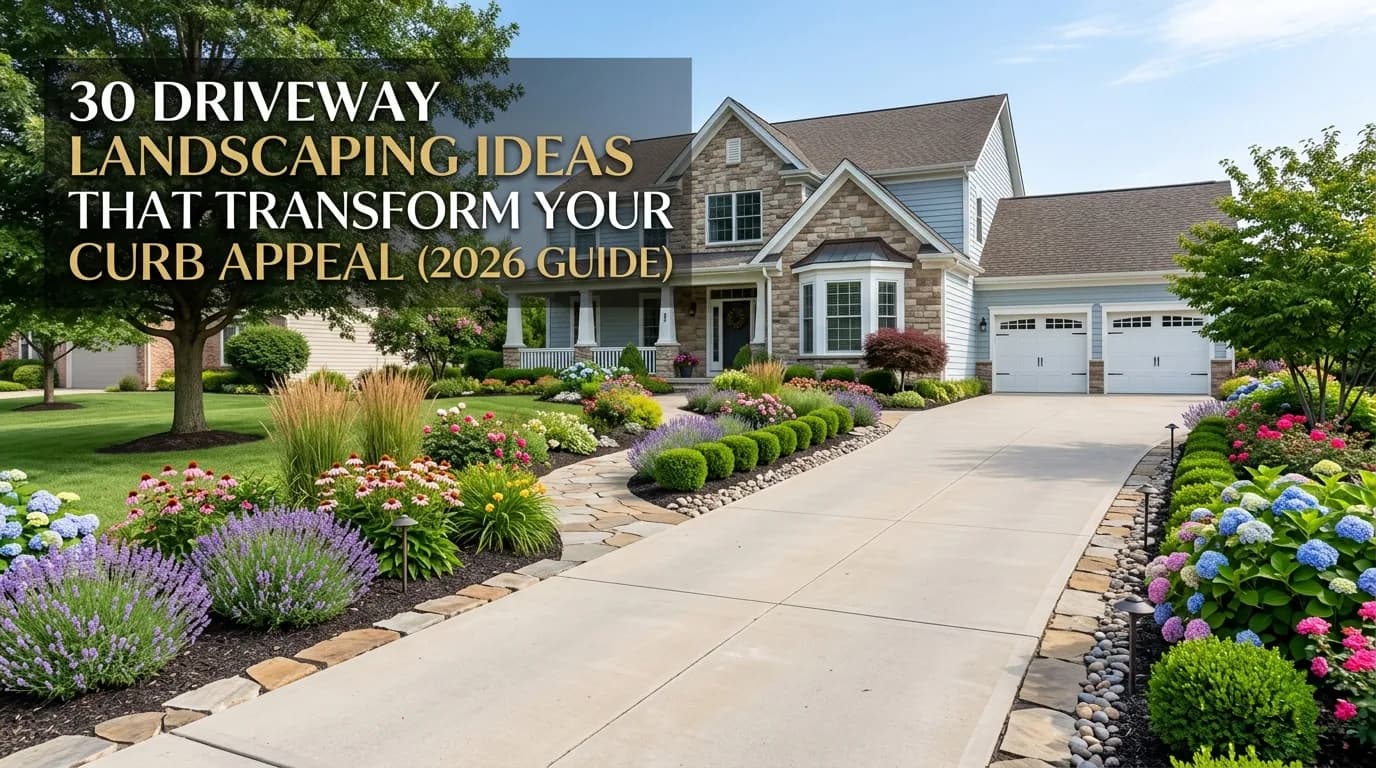
Your driveway is the first thing visitors see — and it's usually an expanse of gray asphalt or concrete. Driveway landscaping transforms it from a utilitarian parking strip into a welcoming approach that sets the tone for your entire property.
Well-designed driveway landscaping can add $5,000–$15,000 to perceived home value according to real estate agents. It frames your house, guides the eye, and makes the property feel intentional rather than accidental.
This guide covers 25 driveway landscaping ideas from border plantings to tree-lined allées, with costs, plant lists, and design principles for any driveway length or style.
Core Principles of Driveway Landscaping
1. Soften the Edges: Hardscape (asphalt, concrete) needs softening with plants. Even a narrow 18-inch border makes a massive visual difference.
2. Create Entry Sequence: The driveway should feel like a journey from public street to private home.
3. Balance Symmetry and Nature: Formal homes (Colonial, Georgian) suit symmetrical plantings. Informal homes (Craftsman, Ranch) suit asymmetrical naturalistic plantings.
4. Lighting for Safety + Beauty: Driveway lighting prevents accidents and highlights landscaping after dark.
5. Low Maintenance Wins: Driveways see salt, heat, compacted soil, and reflected sun — choose tough plants.
1. Crepe Myrtle Allee (Southern Classic)
Plant crepe myrtles (10–15 ft apart) along both sides of a long driveway. Spectacular in July–September (pink, red, white blooms) and exfoliating bark provides winter interest.
Best for: Long driveways (100+ ft), Southern states (zones 7–9). Spacing: 10–12 ft apart. Cost: $80–$150 per tree.
2. Ornamental Grass Border
A continuous border of ornamental grasses (Karl Foerster, fountain grass, switchgrass) along one or both sides. Movement, seasonal interest, and zero-maintenance after year 1.
Width: 3–4 ft border. Spacing: 24–30 inches apart. Cost: $5–$12 per plant. Best grasses: Karl Foerster (upright), Pennisetum (arching), Little Bluestem (fall color).
3. Belgian Block Edge + Boxwood Hedge
Define the driveway edge with Belgian block (granite cobblestones) and plant a low boxwood hedge just inside. Classic, formal, expensive.
Cost: $15–$35 per linear ft (block + hedge). Boxwood: 'Green Velvet' or 'Winter Gem' (18-inch spacing). Maintenance: Trim hedge 2x/year.
4. Tree-Lined Boulevard Style
Large shade trees (maples, oaks, zelkova) planted 25–40 ft apart along one or both sides. Creates a canopy over the driveway. Grand and long-term.
Best trees: Red maple, sugar maple, zelkova, London plane tree. Spacing: 30–40 ft. Mature height: 40–70 ft.
5. Gravel Driveway with Stone Edging
Replace asphalt with compacted gravel (3/4 inch crushed stone) and edge with large stone slabs (12×24 inch bluestone or granite). Permeable, elegant, and drains naturally.
Cost: $3–$8 per sq ft installed. Edging: Dry-stacked stone or mortared. Maintenance: Add 1 inch gravel every 3 years.
6. Driveway Pillar Entry with Lanterns
Brick or stone pillars flanking the driveway entrance, topped with lantern-style lights. Classic estate entry.
Pillar size: 24×24 inches to 36×36 inches. Height: 3–6 ft. Cost: $800–$3,000 per pair (materials + labor). Lighting: Cast-aluminum or copper lanterns.
7. Low-Maintenance Groundcover Border
A 2 ft border of low groundcovers along the driveway: creeping thyme, sedum, or pachysandra. Never needs mowing, minimal weeding.
Best groundcovers: Creeping thyme (sun), pachysandra (shade), sedum (sun, drought). Cost: $2–$5 per sq ft. Maintenance: Pull weeds 3x/year.
8. Solar Stake Lights Along Edge
Line the driveway with solar stake lights (every 8–12 ft) for nighttime illumination. No wiring needed.
Light spacing: 8–12 ft apart. Cost: $8–$25 per light. Runtime: 6–8 hours per night with full-sun charge. Best for: Short to medium driveways.
9. Wildflower Strip Border
A 2–3 ft strip of native wildflowers along one side: black-eyed Susan, coneflower, wild bergamot. Blooms June–October, supports pollinators.
Width: 2–3 ft. Plants: 18-inch spacing. Cost: $2–$4 per sq ft (plants or seed). Maintenance: One mow per year (late winter).
10. Driveway Pergola Entry
A pergola spanning the driveway at the entrance, draped with wisteria or climbing roses. Marks the transition from public street to private property.
Span: 12–20 ft wide (to clear vehicles with clearance). Height: 9–10 ft minimum. Cost: $2,000–$6,000 installed.
11. Dwarf Evergreen Hedge
A low evergreen hedge (18–24 inches tall) of dwarf boxwood or dwarf yew along the driveway. Provides year-round structure.
Best plants: Dwarf boxwood ('Green Gem'), dwarf yew. Spacing: 18 inches. Maintenance: Trim once/year.
12. Brick Paver Driveway with Grass Joints
Brick pavers laid in herringbone or basket-weave pattern, with turf grass growing in the joints. Softens the hardscape.
Cost: $12–$30 per sq ft installed. Grass: Fine fescue or perennial rye seed in joints. Maintenance: Mow grass in joints monthly.
13. Circular Driveway with Central Island
A circular driveway with a planted center island (often with a specimen tree or fountain). Classic for large properties.
Island diameter: 12–20 ft minimum. Center feature: Specimen tree (Japanese maple, flowering cherry), fountain, or sculptural planting. Cost: $5,000–$20,000 for full circular drive.
14. Liriope Border (Southern Classic)
Liriope muscari (lilyturf) planted in a continuous 12–18 inch border along the driveway. Purple flower spikes in late summer. Evergreen. Indestructible.
Spacing: 12 inches apart for solid border. Cost: $3–$6 per plant. Best zones: 6–10.
15. Tree Grate Driveway Trees
Plant trees in tree grates (metal grates over root zone) in an otherwise paved driveway. Urban solution for adding greenery to tight spaces.
Grate size: 4×4 ft to 6×6 ft. Trees: Ornamental pear, zelkova, crabapple (narrow upright varieties). Cost: $300–$800 per tree + grate.
16. Modern Steel Edge + Minimalist Plantings
Corten steel (weathering steel) edging defines the driveway border. Inside: minimalist mass plantings of ornamental grasses or a single evergreen species.
Edging: Corten steel 1/4 inch thick, 6 inches tall. Plants: Karl Foerster grass or dwarf Alberta spruce. Aesthetic: Modern, clean, architectural.
17. Shade-Tolerant Driveway Border (Wooded Lots)
For driveways under tree canopy: hostas, ferns, wild ginger, and pachysandra in a shade border.
Best plants: Hostas, ferns (Christmas, autumn), wild ginger, pachysandra. Width: 2–3 ft border. Cost: $4–$8 per sq ft.
18. Flowering Shrub Mass Planting
Mass planting of one flowering shrub species along the driveway: hydrangea, spirea, or knockout roses. Unified, high-impact.
Best shrubs: Hydrangea 'Annabelle', spirea 'Goldflame', knockout roses. Spacing: 3–4 ft apart. Bloom: June–frost (roses), June–July (hydrangea).
19. Decomposed Granite Driveway with Native Grasses
Replace asphalt with stabilized decomposed granite (DG) and edge with native ornamental grasses. Permeable, natural, and California modern.
Cost: $4–$10 per sq ft for stabilized DG. Grasses: Blue grama, sideoats grama, little bluestem. Best for: Southwestern and West Coast climates.
20. Driveway Apron Uplighting
Uplight trees or shrubs flanking the driveway entry with low-voltage spotlights. Creates drama and guides visitors at night.
Lights: 5-watt LED bullets aimed upward. Spacing: One light per tree. Cost: $80–$200 per fixture installed. Effect: Tree canopy illuminated from below.
21. Low Stone Wall with Perennial Border
A 12–24 inch dry-stacked stone wall along the driveway with perennials planted at the top: daylilies, coneflower, salvia.
Wall height: 12–24 inches. Cost: $25–$60 per linear ft. Plantings: 18-inch spacing.
22. Formal Symmetrical Entry
Matching plantings on both sides of a straight driveway: a pair of columnar evergreens at the entry, then repeating shrubs every 10 ft (boxwood, yew, holly).
Best for: Colonial, Georgian, traditional architecture. Plants: Emerald arborvitae, Sky Pencil holly, boxwood. Cost: $500–$2,000 for full symmetrical design.
23. Cottage-Style Driveway Border
A relaxed, overflowing border of cottage perennials: roses, lavender, catmint, salvia, and ornamental grasses. Romantic and abundant.
Width: 3–4 ft border. Best plants: Drift roses, lavender, catmint, Russian sage. Aesthetic: English cottage meets American driveway.
24. Driveway Gate with Climbing Vines
A wooden or metal driveway gate with climbing roses, clematis, or wisteria trained over it. Marks entry and provides seasonal color.
Gate style: Wood split-rail, metal arbor, or solid wood. Vines: Climbing roses (repeat bloom), clematis (purple, pink, white), wisteria (fragrant). Cost: $800–$4,000 for gate + installation.
25. Gravel Parking Court with Central Planting
A gravel parking court at the end of the driveway with a central planted island. The island breaks up the expanse of gravel.
Island size: 8×12 ft minimum. Plants: Specimen tree (Japanese maple, crape myrtle) underplanted with perennials or groundcovers. Gravel: Pea gravel or crushed stone.