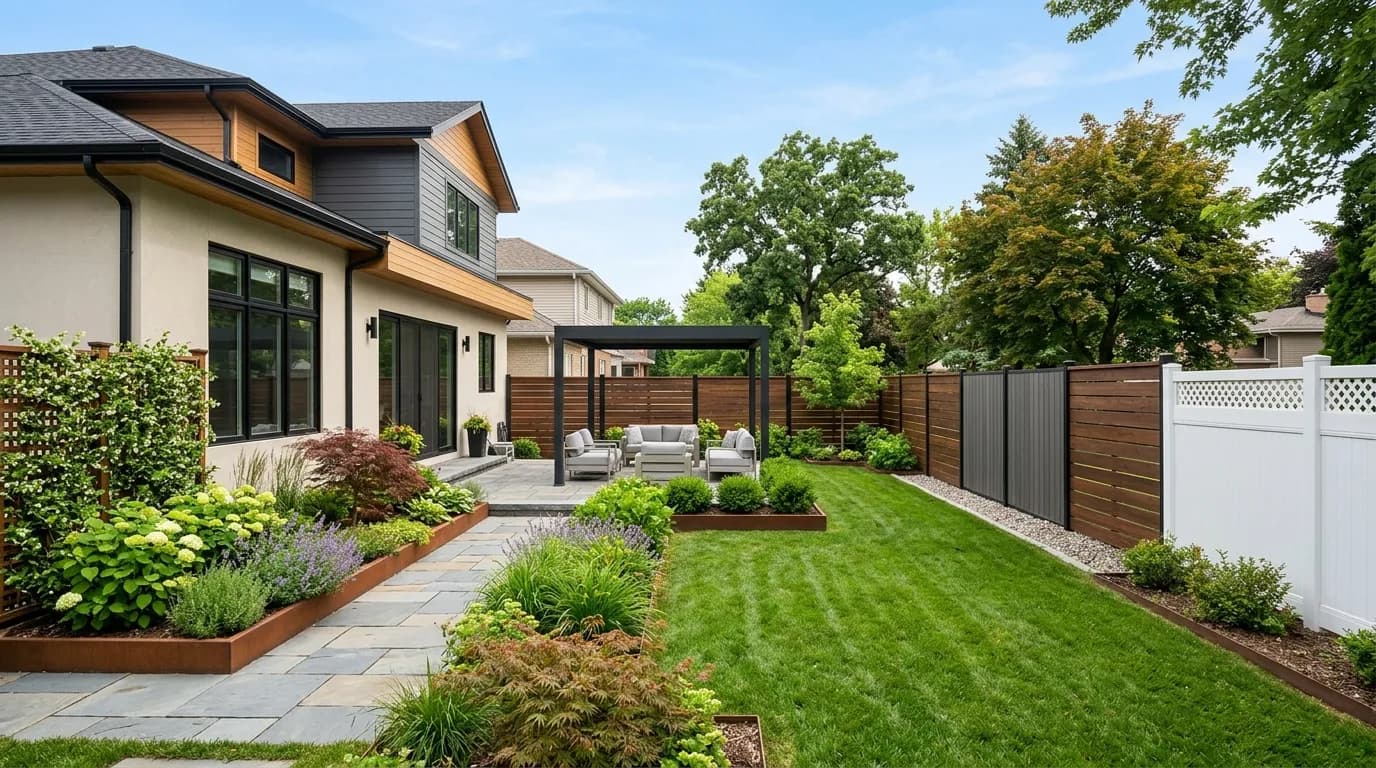
Privacy is the #1 thing homeowners want in an outdoor space. A great privacy fence doesn't just block sight lines — it defines your yard as a room, reduces noise, creates a safe play space for kids and pets, and dramatically increases how much you actually use your outdoor space.
This guide covers 30 privacy fence ideas by material, style, and application — with real cost data, design tips, and the best plant pairings to soften and enhance your fence.
Privacy Fence Height Guide
Before picking a style, get the height right. Too short and you've spent money without gaining privacy. Too tall and it looks institutional — and may require a permit.
| Height | Effect | Best For |
|---|---|---|
| 4 feet | Partial privacy; defines space | Pool surrounds, garden borders |
| 6 feet | Standard privacy; blocks most sight lines | Most residential applications |
| 8 feet | Maximum privacy; also reduces noise | Urban lots, busy streets, hot tubs |
| 10–12 feet | Commercial-grade; requires permit in most areas | Rare residential uses |
Most residential privacy fences are 6 feet tall. Check local zoning — most municipalities allow 6-foot fences in the backyard without a permit, but restrict front yard fences to 3–4 feet.
Privacy Fence Materials: Cost & Comparison
| Material | Cost Installed | Lifespan | Maintenance | Best Style |
|---|---|---|---|---|
| Pressure-treated pine | $15–$30/linear ft | 15–20 years | Stain every 3–5 years | Traditional, rustic |
| Cedar | $20–$40/linear ft | 20–30 years | Stain every 5–7 years | Warm, natural |
| Redwood | $35–$65/linear ft | 25–35 years | Minimal | Premium natural |
| Composite / vinyl | $25–$55/linear ft | 25–40 years | Wash annually | Clean, modern |
| Aluminum | $30–$60/linear ft | 50+ years | None | Modern, open |
| Steel / Corten | $40–$80/linear ft | 50+ years | None | Industrial, modern |
| Bamboo | $15–$30/linear ft | 10–20 years | Minimal | Tropical, Asian |
| Living hedge | $5–$20/linear ft | Indefinite | Trimming | Naturalistic |
| Concrete block | $30–$60/linear ft | 50+ years | None | Contemporary, stucco |
30 Privacy Fence Ideas
Classic Wood Fences
1. Board-on-Board Cedar Fence
The gold standard of privacy fences. Boards are overlapped so there are no gaps, ensuring complete privacy while the overlapping pattern adds depth and texture. Natural cedar ages to a beautiful silver-gray or can be stained. One of the most universally flattering fence styles for any home.
2. Horizontal Cedar Slat Fence
Run cedar boards horizontally instead of vertically for a distinctly modern look. Small gaps between boards allow light and air while maintaining visual privacy. The horizontal lines make yards feel wider. Pair with a simple steel frame for a clean, contemporary result.
3. Dog-Eared Wood Privacy Fence
The most common and affordable privacy fence style. Vertical pointed-top boards in a standard pattern. Functional, accessible, and easy to replace individual boards. Not the most distinctive, but reliable and cost-effective.
4. Shadowbox (Board-on-Board with Alternating Sides)
Similar to board-on-board, but boards alternate on each side of the rail — giving privacy from both sides while allowing airflow. Ideal for fences that are visible from both your yard and the street or alley.
5. Stockade Fence
Tightly butted boards with pointed tops. The classic "fort" fence style. Very affordable, provides complete privacy, but has a rustic, utilitarian feel. Best in informal or rural settings.
6. Tongue and Groove Fence
Boards with interlocking profiles that fit precisely together — no gaps, no overlapping. Clean, flat surface on both sides. More expensive than board-on-board but creates a more refined appearance.
7. Lattice-Top Privacy Fence
A full 4–5 foot privacy panel at the bottom with a 1–2 foot decorative lattice section at the top. Softens the look of a tall privacy fence while maintaining the enclosed feeling. Lattice can support climbing vines.
Modern & Contemporary Fences
8. Horizontal Steel Slat Fence
Flat steel bars set horizontally with small gaps. Extremely durable, minimal maintenance, and creates a sleek, architectural look. Can be powder-coated in any color — matte black is the most popular. Works brilliantly with modern and mid-century homes.
9. Corten / Weathering Steel Fence
Corten steel panels develop a beautiful rust-orange patina that stabilizes and protects the metal. No painting, no maintenance. The warm tones of weathering steel complement both modern and naturalistic landscapes.
10. Black Aluminum Privacy Screen
Powder-coated aluminum in matte black, with tight vertical or horizontal slat spacing. Nearly maintenance-free, won't rust, and creates a sophisticated, almost gallery-like backdrop for plantings.
11. Concrete Block Wall
A solid concrete block wall (typically CMU block, stuccoed and painted) is the most permanent and maintenance-free privacy option. Very effective at blocking both sight lines and noise. Best in contemporary, Spanish, or Mediterranean landscapes.
12. Concrete Sleeper Fence
Precast concrete slabs (sleepers) slot into steel posts to create clean, modern panel fences. Common in Australia; increasingly popular in the US. Create a monolithic flat surface that reads as a feature wall, not just a fence.
13. Corrugated Metal Privacy Fence
Industrial-look corrugated steel or aluminum panels in a fence frame. Very affordable ($10–$25/sq ft), surprisingly attractive with the right planting, and extremely durable. Works well in rustic modern, farmhouse, and urban industrial aesthetics.
14. Gabion Wall Screen
Wire mesh baskets filled with stone, glass, or recycled materials create privacy walls with texture and visual interest. More hardscape than fence — a permanent feature that can double as a retaining wall on sloped lots.
Decorative & Artistic Fences
15. Laser-Cut Metal Privacy Screen
CNC laser-cut steel or aluminum panels in botanical, geometric, or abstract patterns. Used as accent panels within a larger fence, or as standalone privacy screens on a patio or deck. Doubles as art. Custom patterns are available from specialty fabricators.
16. Woven Bamboo Fence
Panels of woven bamboo in a wood frame. Natural, organic, affordable, and surprisingly effective at privacy. The warm honey tones pair beautifully with tropical and Asian-inspired plantings. Lifespan is 10–15 years without treatment.
17. Trellis Privacy Screen with Climbers
A heavy wood or metal trellis, planted with fast-growing climbers (climbing roses, clematis, Virginia creeper, jasmine, trumpet vine), creates a living privacy screen within 2–3 seasons. More beautiful than any fence. Blooms and seasonal color. Requires annual pruning.
18. Vertical Garden Privacy Wall
A metal frame with integrated planters creates a green wall of plants that provides both privacy and beauty. Works best in sheltered locations with adequate irrigation. Can include herbs, succulents, ferns, or flowering plants.
19. Mixed Material Privacy Fence
Combine two materials — wood posts with metal panels, concrete pillars with cedar infill, stone columns with aluminum slats. Custom combinations create a completely unique look tailored to your home's architecture.
20. Painted Fence Feature Wall
Take a standard wood privacy fence and paint it in a bold color — deep forest green, navy, terracotta, charcoal — to turn it into a design statement. The fence becomes a backdrop that makes plantings pop.
Living Fences & Plant Screens
21. Arborvitae Screen
Emerald Green Arborvitae is the most popular plant screen in America. Grows 12–15 feet tall, stays 3–4 feet wide, requires almost no maintenance, and provides year-round screening. Plant 3 feet apart for a dense screen in 3–4 years.
22. Bamboo Screen (Clumping Variety)
Clumping bamboo (Fargesia species) reaches 10–15 feet tall and creates a lush, tropical screen that rustles in the breeze. Always use clumping, not running bamboo — running bamboo is invasive and will spread into neighboring yards.
23. Privet Hedge
Ligustrum (privet) grows fast (2–3 feet per year), tolerates heavy shearing, and creates a very dense, formal hedge. Works in zones 4–10. Keep trimmed to desired height and width. Flowers in spring attract pollinators.
24. Holly Screen (American or Nellie Stevens)
Evergreen hollies create dense, year-round privacy with the bonus of winter berries for wildlife. Nellie Stevens Holly reaches 15–25 feet and is one of the fastest-growing evergreen screens available.
25. Ornamental Grass Screen
Plant tall ornamental grasses (Miscanthus, Pampas Grass, Giant Reed) in a dense row for a natural, flowing privacy screen. Not evergreen in cold climates, but stunning in motion. Reaches 8–12 feet in one season.
Budget & Practical Options
26. Vinyl Privacy Fence
White, tan, or gray vinyl fence panels that never need painting and won't rot or splinter. Very low maintenance. Less natural-looking than wood, but extremely practical for busy homeowners. Vinyl fencing costs $25–$55 per linear foot installed.
27. Chain Link with Privacy Slats
Insert vinyl or aluminum privacy slats into an existing chain link fence for a quick, affordable privacy upgrade. Cost: $3–$8 per linear foot for slats. Works instantly without new post installation.
28. Temporary Bamboo Roll
Rolled bamboo screening attached to an existing fence or frame. The most affordable option ($1–$3 per square foot), but limited lifespan (5–10 years). Good for renters or as a temporary solution while plantings establish.
29. Outdoor Privacy Curtains
Heavy weather-resistant curtains hung on a pergola or tension wire create a room-like enclosure for a patio or deck. Extremely affordable ($30–$100 per panel), portable, and available in dozens of colors. Not a fence, but often more effective for a specific seating area.
30. Recycled Pallet Fence
Free or very low-cost shipping pallets, cleaned and painted, can be assembled into a surprisingly attractive vertical privacy screen. Best for rustic, farmhouse, or boho aesthetics. Limited durability (5–10 years) but zero material cost.
Design Your Fence + Landscape Together
The biggest mistake homeowners make with privacy fences is treating them as isolated elements. A fence that doesn't integrate with the surrounding landscape always looks like an afterthought.
Great fence design considers:
- Material that complements the home's architecture
- Color that works with the house and plantings
- Plant pairings that soften the fence and add dimension
- Lighting along the fence line for evening use
- Gate placement that flows naturally with the yard layout
Yardcast designs your entire landscape — fence placement, plantings, patio, lighting, and more — using photos of your actual yard. See 3 complete AI designs showing how different fence styles and materials look in your specific space before spending a dollar.
[Design My Yard with a Privacy Fence →](/redesign)
Upload your photos, describe your style and privacy goals, and see 3 complete design options in 60 seconds. No account required, always free to preview.
Best Plants to Pair With Your Privacy Fence
The fence defines the space; the plants make it beautiful. Here are the best plant pairings by fence style:
For Modern/Contemporary Fences: Japanese Maple, ornamental grasses (Feather Reed Grass, Karl Foerster), agave, yucca, climbing hydrangea
For Cedar/Natural Wood Fences: Climbing roses, clematis, lavender, salvia, tall ornamental grasses
For Dark/Black Metal Fences: White or pale-colored flowers pop dramatically against dark backgrounds — white roses, white agapanthus, silver foliage (lamb's ears, dusty miller)
For Concrete/Stucco Walls: Bougainvillea, jasmine, tall ornamental grasses, agave, olive trees
For Bamboo Fences: Black-eyed Susan vine, jasmine, ferns, tropical-looking plants
Frequently Asked Questions
Q: What is the most affordable privacy fence?
A: Pressure-treated pine board-on-board or stockade fence is the most affordable at $15–$25 per linear foot installed. DIY installation can cut costs significantly, though post setting and frame construction require some skill.
Q: What fence provides the most privacy?
A: Any solid-panel fence with no gaps provides 100% visual privacy. Board-on-board, tongue-and-groove, or vinyl panel fences provide complete privacy. Horizontal slat fences provide privacy at standing height but may have limited sight lines at other angles.
Q: How long does a wood privacy fence last?
A: Pressure-treated pine lasts 15–20 years; cedar lasts 20–30 years; redwood can last 35+ years. Applying a quality stain or sealant every 3–5 years significantly extends the life of any wood fence.
Q: Do I need a permit for a 6-foot privacy fence?
A: Requirements vary by municipality. Most areas allow 6-foot fences in the backyard without a permit, but many restrict front yard fences to 3–4 feet and require permits for anything taller. Always check with your local zoning office before installing.
Q: What is the most low-maintenance privacy fence?
A: Aluminum, steel, vinyl, and concrete block require the least maintenance. All are resistant to rot and insects and need only occasional washing. Steel can be powder-coated to prevent rust.
Q: How do I make my fence look more attractive?
A: Plant along the base of the fence, add climbing vines to the fence face, install lighting along the fence line, paint or stain the fence a complementary color, and add a decorative gate. The fence should integrate with your landscape, not stand apart from it.