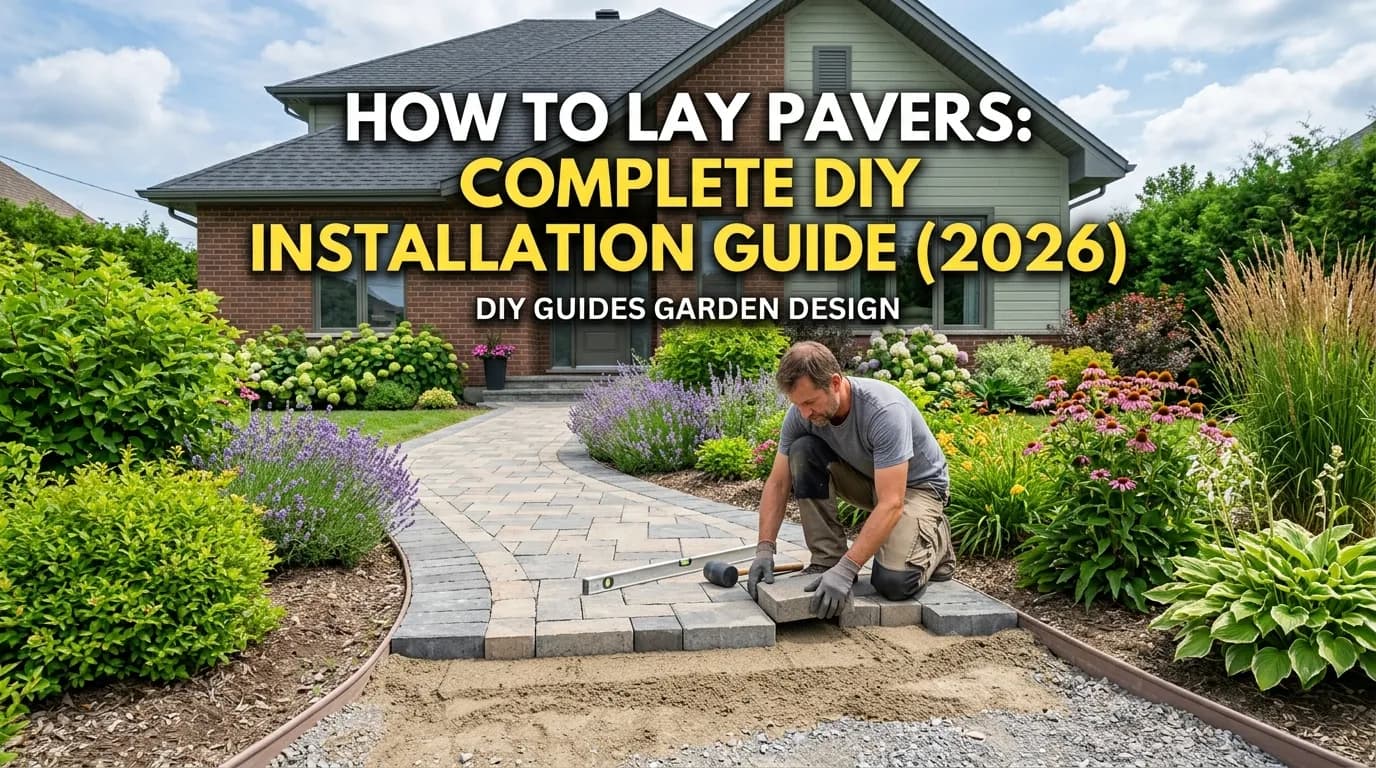
Installing pavers yourself can save $2,000–$8,000 compared to hiring a professional installer — and produce results that last 20–40 years with minimal maintenance. This guide covers everything from choosing your materials to the final sand-jointing step.
What Type of Pavers Should You Use?
Before you dig, choose your paver material. Each has a different price point, appearance, and installation requirement.
| Material | Cost/sq ft (installed DIY) | Durability | Maintenance |
|---|---|---|---|
| Concrete pavers | $6–$12 | 25–50 years | Low |
| Natural stone (flagstone) | $10–$20 | 50+ years | Low–Medium |
| Brick | $8–$15 | 25+ years | Low |
| Porcelain pavers | $12–$25 | 40+ years | Very low |
| Travertine | $10–$20 | 30–50 years | Medium |
For beginners: Concrete pavers are the best starting point. They're uniform in thickness (making base prep easier), widely available, and come in dozens of styles and colors. Porcelain pavers look stunning but are heavy and harder to cut without a wet saw.
For walkways and patios: Any of the above work. Choose based on the style of your home and how much traffic the surface will see.
For driveways: Use concrete pavers rated for vehicular traffic (typically 3⅛" thick). Thinner pavers will crack under car weight.
Tools and Materials Checklist
Tools you'll need:
- Plate compactor (rent for $75–$125/day) — non-negotiable for a solid base
- Circular saw with diamond blade OR rented paver saw
- String line and stakes
- Hand tamper (for edges where plate compactor can't reach)
- Rubber mallet
- Level (4-ft and torpedo)
- Screeding board (straight 2×4 works fine)
- Broom
- Tape measure, chalk line, pencil or lumber crayon
Materials:
- Crushed stone base (compactable gravel, 3/4" minus): 6–8" depth for patios, 4" minimum for walkways
- Coarse concrete sand (bedding layer): 1" depth
- Pavers: Measure your area and add 10% for waste and cuts
- Polymeric sand: For jointing (prevents weeds and ant tunnels)
- Landscape fabric (optional): Goes under the gravel base in areas with heavy weed pressure
- Edge restraints: Plastic or aluminum paver edging, secured with spikes
Step 1: Design and Layout
Before any digging, establish your design. Sketch it on paper or use an AI design tool to visualize the space — this saves you from mid-project changes that waste materials.
Mark the perimeter with spray paint or string. Account for a 1/8" slope away from structures (about 1" per 8 feet) for drainage. Water pooling against your house foundation is a much bigger problem than a slightly sloped patio.
Standard paver patterns to consider:
- Running bond — offset rows like bricks; easiest to lay, fewest cuts
- Herringbone (90° or 45°) — strongest pattern for driveways and high-traffic areas; more cuts required
- Basketweave — pairs of pavers alternating direction; classic look, moderate cuts
- Stack bond — straight grid; modern look but least structurally stable
- Random/ashlar — mixed sizes; stunning results but requires planning
Step 2: Excavation
Dig down to accommodate your base layers:
- For patios: 8–10" deep (6–8" gravel + 1" sand + paver thickness)
- For walkways: 6–8" deep (4–6" gravel + 1" sand + paver thickness)
Most concrete pavers are 2⅜" (60mm) thick. Add that to your base depth to determine total excavation depth. For example: 6" gravel + 1" sand + 2.375" paver = 9.375" total — dig 10" to have room to adjust.
Remove all organic material (roots, sod, topsoil). Organic material compresses over time and causes pavers to sink unevenly. If you hit soft spots, dig them out and fill with extra compacted gravel.
Already have a design in mind for your patio or walkway? [Upload a photo of your yard and see how AI designs your outdoor space in 60 seconds at Yardcast →](/redesign)
Step 3: Compact the Subgrade
Before adding gravel, compact the native soil with a plate compactor. Make 3–4 overlapping passes. The soil should feel firm underfoot with minimal give. This step is skipped by beginners and is the #1 cause of paver failure (settling, heaving, cracking).
If the soil is very soft (heavy clay, wet conditions), consider a geotextile fabric layer here before your gravel.
Step 4: Install the Gravel Base
Add compactable gravel (crushed stone, 3/4" minus — not round river rock, which won't interlock) in 2–3" lifts, compacting each layer before adding the next. Never compact more than 3" at a time — deeper layers won't compact properly.
Minimum base depths:
- Patios and walkways: 4–6"
- Driveways: 6–8"
- Areas with heavy clay or poor drainage: 8–12"
After full compaction, the base should be within 1/4" of level across a 10-foot span.
Step 5: Screeding the Sand Bedding Layer
Set two metal pipes (conduit, 3/4" or 1" diameter works well) parallel to each other, 6–8 feet apart, as screed guides. Set them at your finished height minus paver thickness.
Pour 1" of coarse concrete sand between the pipes. Using a straight 2×4, draw it across the pipes to create a perfectly flat, 1" bedding layer. Remove the pipes and fill the voids by hand, then lightly smooth.
Do not compact the sand bedding layer. It's meant to be loose so pavers seat into it. Compacting it now will ruin your level surface.
Step 6: Lay the Pavers
Start from a straight edge — your house wall, a straight sidewalk, or a string line you've set. Work away from this edge in an organized pattern.
Place each paver by setting it straight down, not sliding it in (sliding disturbs the sand). Use a rubber mallet to tap each paver level with its neighbors. Check level frequently with your torpedo level and 4-ft level.
Tips for efficiency:
- Kneel on the pavers you've already laid, not on the sand
- Lay 2–3 rows ahead before checking level across the whole area
- Keep grout lines consistent (1/8"–3/16" is standard for polymeric sand)
- Mark cut lines with chalk and batch your cuts rather than cutting one at a time
Step 7: Cut Pavers for Edges
Use a circular saw with a diamond blade (for occasional cuts) or rent a wet saw (for heavy cutting). A chisel and hammer work for natural stone flagstone.
Safety: Always wear eye protection, hearing protection, and a dust mask when cutting. Silica dust from cutting concrete pavers is a serious lung hazard.
Score the line first with a light cut, then make the full cut in one smooth pass. Don't rush it.
Step 8: Install Edge Restraints
Before compaction, install plastic or aluminum paver edging around the entire perimeter. Drive spikes through the edging every 12" into the gravel base. Edge restraints are what hold your entire installation together — skip them and pavers will gradually migrate outward over time.
Step 9: Final Compaction
With all pavers laid and edge restraints in place, make 3–4 passes with the plate compactor over the entire surface. Use a rubber pad attachment to protect the paver faces from scratching.
This final compaction forces pavers into the sand bedding, seats them fully, and creates a rock-solid surface.
Step 10: Polymeric Sand Jointing
Pour dry polymeric sand over the surface and sweep it into the joints with a stiff push broom. Make multiple passes until joints are filled to within 1/8" of the paver surface.
Blow off excess sand with a leaf blower on low speed. Then lightly mist the surface with water — activating the polymers that bind the sand together into a solid joint. Do not soak; just mist.
Allow to cure for 24–48 hours before use. Polymeric sand hardens the joints against weeds, ants, erosion, and movement.
Paver Installation Cost Breakdown (DIY vs. Pro)
| Item | DIY Cost | Professional Cost |
|---|---|---|
| Pavers (200 sq ft) | $600–$1,200 | $600–$1,200 |
| Gravel base | $150–$300 | $150–$300 |
| Sand bedding | $50–$100 | $50–$100 |
| Edge restraints | $60–$100 | $60–$100 |
| Polymeric sand | $40–$80 | $40–$80 |
| Tool rental | $150–$250 | Included |
| Labor | $0 (your time) | $1,500–$6,000 |
| Total | $1,050–$2,030 | $2,500–$8,000 |
Note: Professional installers are worth it for large, complex projects (driveways over 1,000 sq ft, intricate patterns, significant slope grading). For a 200–400 sq ft patio or walkway, DIY is very achievable in a weekend with a helper.
Common Paver Installation Mistakes
1. Skipping compaction steps. The base is everything. A well-compacted base lasts decades; a soft base starts settling in 2–3 years.
2. Using the wrong gravel. Round river rock won't interlock and compact. Use angular crushed stone (3/4" minus or 1" minus).
3. Not accounting for drainage slope. You need 1/8" per foot of slope away from structures. A flat patio will pond and drain poorly.
4. Skipping edge restraints. Pavers will gradually migrate and gaps will open.
5. Laying pavers in wet conditions. Wait for dry weather. Sand in the bedding layer and joints must be dry for proper installation and compaction.
6. Underestimating material. Always order 10% extra for cuts and breakage. Running out mid-project is frustrating when your batch is discontinued.
What to Do If Pavers Start Sinking
Sinking pavers indicate a base failure (usually insufficient compaction or water infiltration into the base). The fix: pull up the affected pavers, add and compact more gravel base, re-screed the sand layer, and reinstall. Don't just add sand under sunken pavers — it's a temporary fix that will fail again.
Design Your Paver Project First
The most common mistake homeowners make is buying materials before finalizing the design. Shape, pattern, material color, border treatment, and how the patio connects to the lawn or garden beds all affect how much material you need and how the project looks.
[Visualize your paver patio or walkway design first → Upload a yard photo and get 3 AI-generated design options at Yardcast in 60 seconds →](/redesign)
Seeing your actual yard with different paver styles, colors, and patterns helps you make confident choices before spending a dollar on materials.
FAQ: How to Lay Pavers
Q: How long does it take to lay pavers?
A: A 200 sq ft patio takes most first-timers 1–2 days with a helper. Excavation and base prep take the most time. Experienced installers can do the same area in 6–8 hours.
Q: What base do you need for pavers?
A: A compacted gravel base (3/4" minus crushed stone) is essential: 4–6" for patios and walkways, 6–8" for driveways. Over the gravel, add 1" of coarse concrete sand for the bedding layer.
Q: Can you lay pavers on dirt?
A: No. Pavers laid directly on soil or without adequate base material will sink, shift, and become uneven within 1–3 years. A proper crushed-stone base is essential for lasting installation.
Q: Do I need to seal pavers?
A: Sealing is optional but extends life and reduces staining. Most concrete and natural stone pavers benefit from sealing every 3–5 years. Porcelain pavers are factory-sealed and don't require additional sealing.
Q: Can you lay pavers over existing concrete?
A: Yes — and it's actually easier than excavating. Clean the concrete, check for cracks and stability, then use 1/2"–1" of sand bedding and lay pavers as normal. The concrete acts as your base. Ensure the finished height won't create a trip hazard at transitions.
Q: How much slope do pavers need for drainage?
A: 1/8" per foot (1% grade) minimum away from structures. 1/4" per foot is better in areas with heavy rainfall. More than 2% starts to feel noticeably sloped underfoot.
Q: What's polymeric sand and do I need it?
A: Polymeric sand is regular sand mixed with polymer binders that harden the joint when activated with water. It resists weeds, ant excavation, erosion, and joint displacement better than regular sand. Yes — use it. The price difference ($40 vs. $15 for a bag) is worth it.
Q: How long do pavers last?
A: With proper installation and a solid base, concrete pavers last 25–50 years. Natural stone and brick can last 50–100+ years. The base is what limits lifespan, not the pavers themselves.