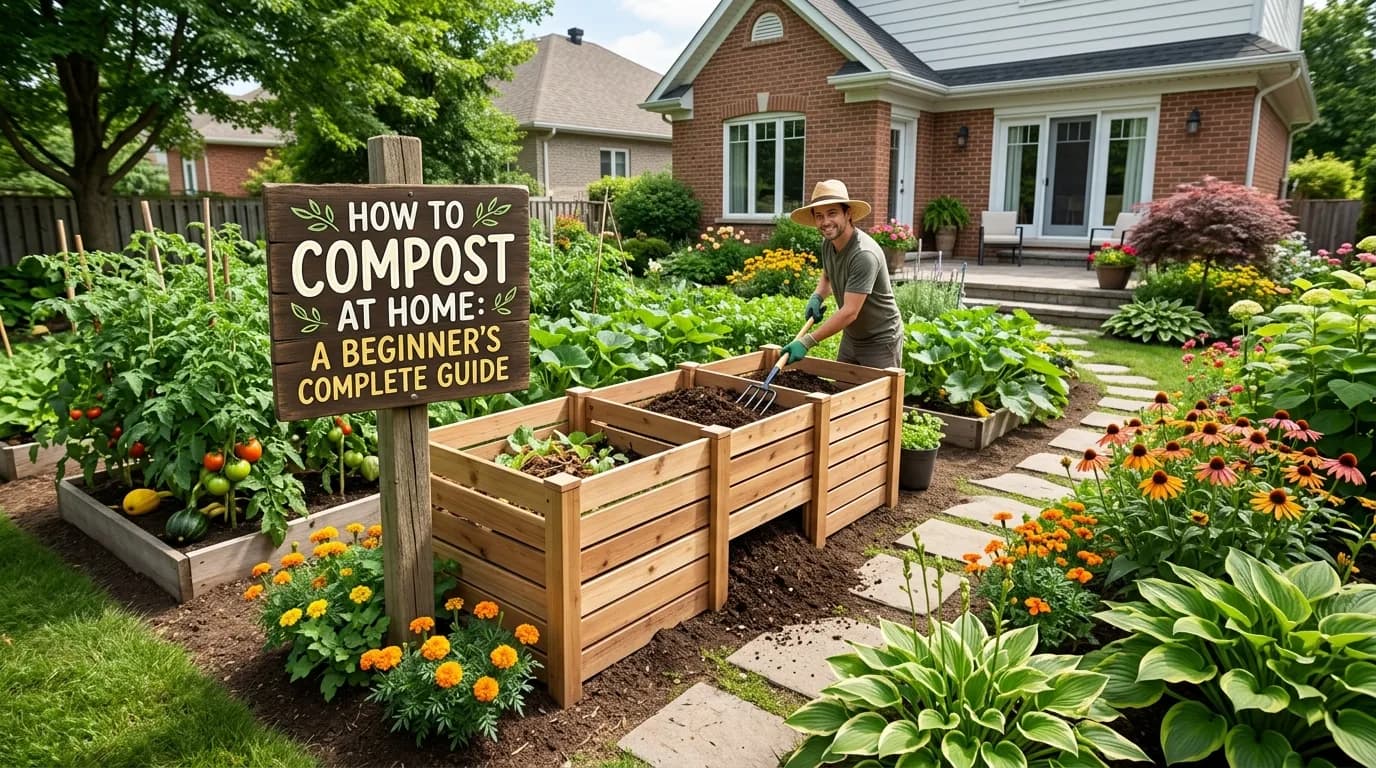
Composting turns yard trimmings, kitchen scraps, and garden waste into rich, dark organic matter that improves soil structure, feeds plants, and reduces what goes to the landfill. A good compost pile can save you $200–$500 per year in fertilizer and soil amendment costs while producing better plant material than anything you can buy.
This guide covers everything you need to start composting at home — from choosing the right bin to harvesting finished compost and using it in your garden.
What Is Compost?
Compost is decomposed organic matter — the natural result of microbes, fungi, worms, and insects breaking down plant and food material. Finished compost looks and smells like rich, dark earth. It's sometimes called "black gold" by gardeners.
What compost does for your soil:
- Improves drainage in clay soil
- Increases moisture retention in sandy soil
- Feeds soil microbes that plants depend on
- Releases slow nutrients over months (not all at once like synthetic fertilizer)
- Raises or neutralizes soil pH depending on starting materials
- Suppresses certain soil-borne diseases
- Reduces need for watering by 20–30% in established beds
Composting Methods Compared
| Method | Cost | Effort | Speed | Best For |
|---|---|---|---|---|
| Open pile | Free | Low | Slow (6–18 months) | Yard waste only, large properties |
| Wire bin | $20–$50 | Low | Moderate (6–12 months) | Yard waste + kitchen scraps |
| Tumbler | $80–$300 | Low-Medium | Fast (4–8 weeks active) | Small yards, kitchen scraps |
| Worm bin (vermicomposting) | $50–$200 | Medium | Very fast (2–3 months) | Apartments, kitchen scraps focus |
| Hot composting | Free | High | Very fast (4–6 weeks) | Large batches, weed-free results |
| Bokashi | $40–$80/system | Low | 2 weeks to ferment | Meats, dairy OK, then bury |
What to Compost (and What to Avoid)
ADD THESE (Browns — Carbon-rich):
- Dry leaves (chop or shred for faster breakdown)
- Cardboard (torn into small pieces, no wax or glossy coating)
- Paper bags, paper towels, newspaper (non-glossy)
- Straw or hay
- Wood chips (small amounts — larger ratios slow decomposition)
- Sawdust (from untreated wood only)
- Corn stalks and husks
- Nut shells (except black walnut — allelopathic)
ADD THESE (Greens — Nitrogen-rich):
- Fruit and vegetable scraps
- Coffee grounds and paper filters
- Tea bags (if paper — remove staple)
- Fresh grass clippings
- Garden trimmings and spent plants
- Eggshells (slow to break down, but valuable calcium)
- Hair and nail clippings
- Seaweed and kelp
AVOID THESE (in most home systems):
- Meat, fish, and bones (attract pests; OK in Bokashi)
- Dairy and oils (same issue)
- Dog and cat feces (pathogen risk)
- Diseased plants (disease can survive composting)
- Invasive weeds that have gone to seed
- Anything treated with pesticides
- Coal ash (wood ash in small amounts is OK)
- Glossy or coated paper
The Carbon-to-Nitrogen Ratio
The ideal C:N ratio for active composting is 25–30:1 (carbon to nitrogen by weight). In practice, this means roughly:
- Equal volumes of browns and greens for a basic pile
- 2–3 parts browns to 1 part greens if using a lot of grass clippings (which are very nitrogen-rich)
- More greens if the pile seems dry and inactive; more browns if it smells bad
You don't need to measure this precisely. If the pile smells like ammonia, add more browns. If it seems dry and inactive, add more greens and water.
Step-by-Step: Starting Your First Compost Pile
Step 1: Choose Your Location
Pick a spot that's:
- Partially shaded (full sun dries the pile; full shade slows it)
- Accessible from kitchen and garden
- On soil rather than concrete (allows drainage and worm access)
- Downwind from your main outdoor living area (properly managed compost barely smells — but give yourself a buffer anyway)
Step 2: Choose Your Container
Options from simple to fancy:
DIY Wire Bin ($0–$25): A cylinder of 4-foot wire fencing (about 10 feet long, forming a 3-ft diameter circle) is the simplest effective bin. Holds about 1 cubic yard. Easy to turn — just lift the cylinder off the pile and re-fill.
Three-Bin System: Build or buy 3 connected bins from wood pallets or lumber. Bin 1 gets fresh materials; Bin 2 is actively composting; Bin 3 holds finished compost. This is the most productive setup for a serious gardener.
Tumbler Composter ($80–$300): A drum that rotates on a stand. Easiest to turn (just spin the drum), keeps pests out, and can produce finished compost in 4–8 weeks with active management. Best for small yards and families generating moderate kitchen scraps.
Commercial Bin with Lid ($30–$80): Available at most hardware stores. Functional but difficult to turn. Better than nothing; works well for slow cold composting.
Step 3: Build Your First Pile
The lasagna method:
- 1Start with a 4-inch layer of coarse browns (sticks, wood chips) at the bottom for drainage
- 2Add a 2-inch layer of finished compost or soil (introduces microbes)
- 3Add 4 inches of greens
- 4Add 4 inches of browns
- 5Sprinkle with water until moist but not dripping
- 6Repeat layers until the pile is 3 feet tall
Step 4: Maintain Moisture and Aeration
Your pile should feel like a wrung-out sponge — moist but not dripping. In hot dry weather, water it weekly. In rainy climates, cover with a tarp to prevent saturation.
Turn the pile every 1–2 weeks for fast composting. Aeration (adding oxygen) is the biggest factor in decomposition speed — more turning = faster compost.
Step 5: Monitor and Troubleshoot
| Problem | Cause | Fix |
|---|---|---|
| Pile smells like ammonia | Too many greens | Add browns |
| Pile smells like rotten eggs | Too wet, anaerobic | Add browns, turn well |
| Pile is dry and inactive | Too dry or too many browns | Add water, add greens |
| Pile is not heating up | Too small or imbalanced | Make pile bigger, add more greens |
| Pests in pile | Food scraps exposed | Bury scraps in center, use lidded bin |
Step 6: Know When Compost Is Ready
Finished compost:
- Looks like dark, crumbly soil
- Smells earthy (like a forest floor)
- Is cool throughout (no more active decomposition)
- Original materials are unrecognizable (a few sticks might remain)
Timeline: Cold composting takes 6–12 months. Hot composting (frequent turning + proper C:N ratio) takes 4–8 weeks. A tumbler takes 4–8 weeks with active management.
How to Use Finished Compost in Your Landscape
For Existing Beds and Gardens
Top-dress with 1–2 inches of compost annually. No tilling needed — worms and microbes pull it down. Apply in spring before mulching, or in fall for winter breakdown.
When Planting New Plants
Mix 2–4 inches of compost into the top 8 inches of soil in a planting area. For individual holes, mix 1 part compost with 3 parts native soil in the backfill.
For Starting Seeds
Mix 25–30% compost with potting mix or native soil for seed-starting. Too much pure compost suppresses germination in some species.
As Lawn Topdressing
Spread ¼ inch of finely screened compost over lawn in spring or fall and rake in lightly. This improves soil health without smothering grass.
As Liquid Fertilizer (Compost Tea)
Fill a 5-gallon bucket with 1 part finished compost, 5 parts water. Let steep 24–48 hours, stirring occasionally. Strain and use the liquid to water plants — it delivers soluble nutrients and beneficial microbes directly to roots.
Composting Timesavers
Shred everything: Chopped materials decompose 3–4× faster than whole items. Run leaves over with a lawn mower, tear cardboard into small pieces, chop kitchen scraps before adding.
Keep a countertop container: A small sealed container (1 gallon, with activated charcoal filter) on the kitchen counter makes it easy to collect scraps daily. Empty it every 2–3 days to your outdoor bin.
Layer as you go: Add a handful of dry leaves every time you add kitchen scraps. This maintains the C:N ratio automatically and reduces smell.
Use a hot composting thermometer: A long-stem compost thermometer ($15–$25) takes the guesswork out — you'll know when the pile is hot (130–160°F for active composting) and when to turn.
Vermicomposting: Composting in a Small Space
Worm bins (vermicomposting) work in apartments, garages, and small yards. Red wiggler worms (Eisenia fetida) eat kitchen scraps and produce worm castings — the highest-quality organic fertilizer you can make at home.
Basic setup:
- Plastic storage bin (18-gallon, drill holes for drainage and air)
- Bedding: torn cardboard or coco coir, dampened
- 1 pound of red wigglers ($30–$50 from suppliers)
- Feed 1–2 times per week: vegetable scraps, coffee grounds, eggshells
Worm castings can be harvested in 2–3 months and used exactly like compost. They're particularly effective for potted plants and seed starting.
What to Do With Compost in Your Landscape Design
Compost is the foundation of a thriving landscape. Used consistently, it transforms even poor soil into productive growing medium that supports healthy plants — which means fewer pest problems, less watering, fewer fertilizer purchases, and better-looking results from everything you plant.
If you're planning a landscape renovation — new beds, a privacy hedge, a native planting — start composting now. By the time your design is installed, you'll have rich material ready to improve the soil.
Related: [Native Plants for Landscaping](/blog/native-plants-for-landscaping) · [Mulching Guide](/blog/mulching-guide-complete) · [Soil Testing Guide](/blog/soil-testing-guide) · [Raised Garden Bed Ideas](/blog/raised-garden-bed-ideas)