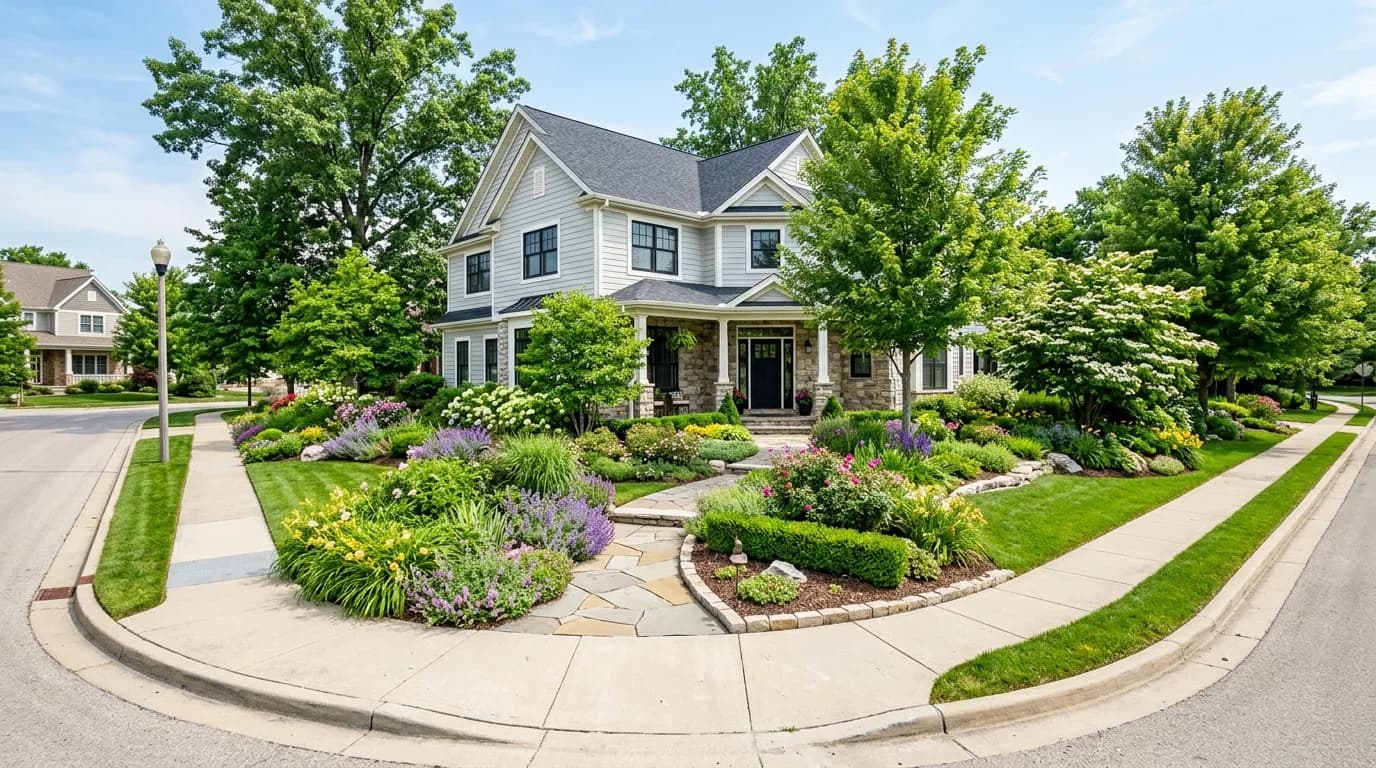
Corner lots are simultaneously the best and most challenging yards to landscape. You have more street exposure than any other lot type — two full facades instead of one — which means twice the curb appeal potential. But you also have more maintenance, more visibility to neighbors and traffic, more privacy challenges, and usually some tricky angles to work with.
The homeowners who get corner lots right treat both street-facing sides as a unified design. The ones who struggle treat them as two separate front yards with no connection. Here are 25 ideas for turning your corner lot into the most-talked-about yard on the block.
Understanding Corner Lot Challenges First
Before picking plants, understand what you're working with:
Sight triangle requirements. Most cities require a triangular "clear zone" at the corner intersection where nothing over 3 feet tall can be planted, to maintain driver visibility. Exact dimensions vary — check your local zoning before you plan any corner anchor planting.
More sidewalk = more maintenance. You have more edge to trim, more sidewalk to sweep, more lawn to mow along the street. This is an argument for planting beds along sidewalk edges rather than lawn — less edge work, less mowing.
Drainage. Corner lots often sit at the lowest grade point at the corner itself, collecting runoff from both street directions. Plan drainage into your design — rain gardens, dry streambeds, and sloped planting beds all handle water better than flat lawn.
Foot traffic cut-throughs. People cut diagonally across corner lots constantly. If you don't address this in your design, the lawn will show it.
Wind and salt exposure. Corner lots are more exposed to wind from multiple directions and, in cold climates, salt spray from streets. Use salt-tolerant plants along the street edge.
The 4 Design Principles for Corner Lots
Before getting to specific ideas, these four principles apply to nearly every successful corner lot design:
1. Anchor the corner. Every great corner lot design has a strong visual anchor at the actual corner of the property — an ornamental tree, a large specimen shrub, a boulder arrangement, or a decorative feature. This anchors both street views and gives the eye a focal point.
2. Connect both sides. Use the same mulch color, edging material, and at least some shared plants on both street-facing sides. This ties the design together and makes it read as intentional rather than random.
3. Define the edge. Clean, defined planting beds along both sidewalks do more for curb appeal than almost anything else. An irregular lawn edge and bare soil look bad; a defined bed with dark mulch and clean edging looks designed.
4. Address privacy strategically. You need privacy without blocking traffic sight lines. Layer plants: low flowering plants near the sidewalk, medium shrubs set back, taller evergreen screening further back from the corner.
Use [Yardcast's free AI landscape design tool to generate a visual plan for your corner lot before you start. Upload a photo, describe your layout, and get design options tailored to your climate.]
25 Corner Lot Landscaping Ideas
1. Ornamental Tree Corner Anchor
Plant a single ornamental tree right at the corner — Japanese maple, crape myrtle, serviceberry, or ornamental cherry — as the visual anchor for the entire design. Size it appropriately for the property. Back the tree with a curved planting bed that sweeps along both street-facing sides, planted with lower shrubs and perennials. This classic approach looks polished and expensive without being complicated.
2. Double Curved Beds Along Both Streets
Eliminate lawn on both street edges and replace with matching curved planting beds. Use the same mulch, the same edging material (steel, aluminum, or natural stone), and a consistent palette of 3–4 plants repeated through both beds. This makes the corner lot look designed by a professional and dramatically reduces edge-trimming maintenance.
3. Cottage Garden Corner
For a relaxed, romantic look: abandon formal structure and plant a loose cottage garden that wraps the corner. Mix perennials — roses, lavender, salvia, catmint, coneflower, black-eyed Susan — in free-flowing drifts that wash around both street-facing sides. Define the edge with a neat clipped boxwood hedge or clean steel edging, and let the planting within be wilder.
4. Privacy Hedge with Flowering Foundation Layer
Create a two-layer planting along your side street: evergreen shrubs (arborvitae, holly, or leyland cypress, set back from the corner to respect sight triangles) for privacy and structure, with a lower flowering layer in front — repeat-blooming shrub roses, lavender, or ornamental grasses — that adds color and softens the hedge's formal appearance.
5. Low Picket Fence + Planting Bed
A white or painted picket fence along both sidewalk edges, kept to 36–42 inches for visibility compliance, provides structure and defines the corner lot clearly. Plant cottage-style on the inside: climbing roses on the fence, perennials in front of it, a specimen tree at the corner. This creates a storybook-quality corner yard.
6. Naturalistic Prairie Corner
For homeowners in the Midwest, Southwest, or who want a low-maintenance, wildlife-friendly approach: plant both street beds with a native prairie mix. Coneflowers, black-eyed Susan, little bluestem grass, prairie dropseed, and native asters create stunning fall color, attract pollinators, and require almost no irrigation once established. Edge it with clean steel edging to show it's intentional, not neglected.
7. Mediterranean Sun Garden
For warm, sunny climates (USDA Zones 7+): lavender, rosemary, agapanthus, ornamental grasses, and Italian cypress create a sun-baked Mediterranean corner that's drought-tolerant, fragrant, and extremely photogenic. Use decomposed granite as the ground cover and natural stone edging. One or two olive trees in the corner anchor the design.
8. Modern Minimalist Corner
Clean lines, limited plant palette, strong contrast. Wide planting beds filled with a single ground cover (liriope, mondo grass, or sedge) backed by a row of identical ornamental grasses or a clipped evergreen hedge. A single specimen tree at the corner. Black steel edging. No lawn on the street edges at all. This look is striking and almost zero-maintenance.
9. Seasonal Color Garden
Keep both beds simple: a framework of evergreen structure plants (boxwood balls, dwarf conifers, ornamental grasses) with seasonal annuals or bulbs changing the color display throughout the year. Spring tulips give way to summer petunias or zinnias, which yield to fall mums. The structure plants provide year-round bones; the annuals provide the wow factor.
10. Formal Symmetrical Design
If your house has a formal architectural style (Colonial, Georgian, traditional), a symmetrical corner design looks stunning. Matching pairs of foundation shrubs (boxwood globes, hollies, or yews), a centered ornamental tree at the corner, and mirrored planting beds on both sides with matching plant palette.
11. Rain Garden at the Corner Low Point
If drainage pools at your corner, turn the problem into a feature. Install a rain garden — a shallow planted depression that accepts runoff and filters it into the soil. Plant it with moisture-tolerant native plants: swamp milkweed, cardinal flower, blue flag iris, Joe-Pye weed. Edge it with natural river rock for a clean, natural look.
12. Corner Boulder Feature
Place one to three large boulders (1.5–3 feet) at the actual corner as a natural focal point, surrounded by ornamental grasses and low flowering perennials. Boulders are striking anchors that cost very little (rented equipment to place), last forever, and have no maintenance. Set them with 1/3 of their mass in the ground so they look naturally occurring rather than dropped in.
13. Dry Streambed Corner Feature
Create a decorative dry streambed that curves from one side of the corner to the other, handling both real drainage and providing ornamental interest. Fill with river rock, add specimen ornamental grasses at the "banks," and plant drought-tolerant perennials alongside. This addresses drainage issues beautifully and turns a problem area into a focal point.
14. White Garden Corner
A "white garden" — all white and silver foliage and flowers — creates an elegant, sophisticated corner display that looks stunning in both daylight and evening. White iceberg roses, white astilbe, lamb's ear (silver foliage), white salvia, white coneflower, and variegated hostas. Anchor with a white-blooming ornamental cherry or serviceberry at the corner.
15. Native Pollinator Corridor
Turn your corner lot into a registered monarch waystation or certified wildlife habitat with native pollinator plants that provide food from early spring through late fall. Milkweed, native asters, goldenrod, anise hyssop, and native bee balm attract dozens of butterfly and bee species. Add a small sign identifying it as a wildlife habitat — it becomes a neighborhood conversation piece.
16. Four-Season Planting Design
Design specifically for year-round visual interest: spring flowering bulbs (tulips, daffodils) → summer perennials (coneflower, black-eyed Susan, salvia) → fall color shrubs (native viburnum, oakleaf hydrangea with exfoliating bark) → winter interest (ornamental grasses, seed heads, evergreen structure, red-twig dogwood). A corner lot designed for all four seasons is always doing something.
17. Stacked Stone Retaining Wall + Planting
If your corner lot has any grade change, a low stacked stone or dry-laid bluestone retaining wall along the street edge creates beautiful structure, solves grade issues, and gives you an elevated planting bed that's highly visible from the street. Plant the raised bed with cascading ground covers (creeping phlox, sedum, thyme) that spill over the wall face.
18. Cut-Through Pathway
Rather than fighting the diagonal foot-traffic cut-through, formalize it. Install a diagonal pathway of flagstone, brick, or pavers from the corner sidewalk intersection into your yard (to the front door or along your main path). Plant on either side with low mounding perennials. The path says "you can walk here" while the plantings say "don't walk anywhere else."
19. Ornamental Grass Wave
A mass planting of ornamental grasses along both street edges creates a low-maintenance, high-impact corner that looks spectacular in fall when grasses turn gold and catch wind. Karl Foerster feather reed grass provides upright structure; Little Bluestem turns red-orange; maiden grass (Miscanthus sinensis) creates fountain-like masses. Edge cleanly and let the grasses move freely.
20. Kitchen Garden Corner
If you want function with your form: a corner kitchen garden with raised beds for vegetables and herbs, bordered by ornamental flowering plants and a picket fence, creates an incredibly charming corner lot. A dwarf apple or pear tree at the corner anchor, espaliered against a trellis, is both functional (fruit) and ornamental. This cottage-meets-kitchen-garden look is extremely popular.
21. Japanese-Inspired Corner Garden
Clean raked gravel, a small Japanese maple (Acer palmatum 'Bloodgood' for red foliage or 'Sango Kaku' for coral bark), specimen moss boulders, bamboo screening (in a root barrier), and low evergreen azaleas or boxwood create a meditative, refined corner garden. Works best in part-shade conditions or on the shaded side of a corner lot.
22. Colonial/Formal Entry Corner
Brick paver edging, clipped boxwood balls in regular spacing, a standard rose or lollipop holly at the corner, and color-coordinated annual beds create a formal, traditional corner that works beautifully with colonial, craftsman, or Cape Cod style homes. Power wash the sidewalk edge, keep everything symmetrical and tightly groomed.
23. Wildflower Meadow Corner
Seed both street beds with a regional wildflower mix and let them bloom freely through the growing season. Cut them back to 4–6 inches in late fall. Annual expense is nearly zero; water needs are minimal once established; and the display is genuinely beautiful — much more interesting than lawn. Add a simple sign identifying the plantings as a wildflower meadow to signal that it's intentional.
24. Evergreen Privacy Screen on Side Street
If privacy from the side street is the primary concern, plant a dense hedge of fast-growing evergreens along the side street setback line. Emerald Green arborvitae (6-foot spacing), American holly, or Sky Pencil holly creates year-round screening. Soften the front of the hedge with ornamental grasses and perennials to add seasonal color and visual depth.
25. Redesign with AI First
Corner lots have enough complexity — two exposures, multiple angles, drainage to consider, sight-triangle rules — that designing them on paper first is well worth the effort. You don't need a landscape architect; you need a good visual plan.
Yardcast's AI design tool lets you upload a photo of your corner lot, describe your style preferences, climate, and budget, and get three design options in about 60 seconds. Each comes with a plant list, color palette, and layout recommendations. It's a $300 consultation for free.
Corner Lot Landscaping Costs
What should you expect to spend?
| Project | DIY Cost | Professional Cost |
|---|---|---|
| Basic mulch + edging (both sides) | $200–$500 | $600–$1,200 |
| Planting beds + shrubs + tree | $800–$2,000 | $2,500–$5,000 |
| Full redesign with hardscape | $3,000–$8,000 | $8,000–$25,000 |
| Privacy hedge (arborvitae row) | $500–$1,500 | $2,000–$4,000 |
For most homeowners, the biggest bang for the buck is: clean edging + fresh mulch + one anchor tree at the corner + a few structured shrubs. That combination, done well, looks like a $10,000 design and costs $1,000–$2,000 to execute yourself.
Start With a Visual Plan
Before spending a dollar on plants or hardscape, get a design. Walking into a nursery without a plan leads to impulse purchases that don't work together. A corner lot especially benefits from seeing the two sides treated as one unified design.
Generate your free AI landscape design at Yardcast →
Upload a photo of your corner lot, answer 5 questions about your style, budget, and climate, and have three visual design options in 60 seconds. It's the fastest way to figure out what your corner lot could look like before you commit to anything.