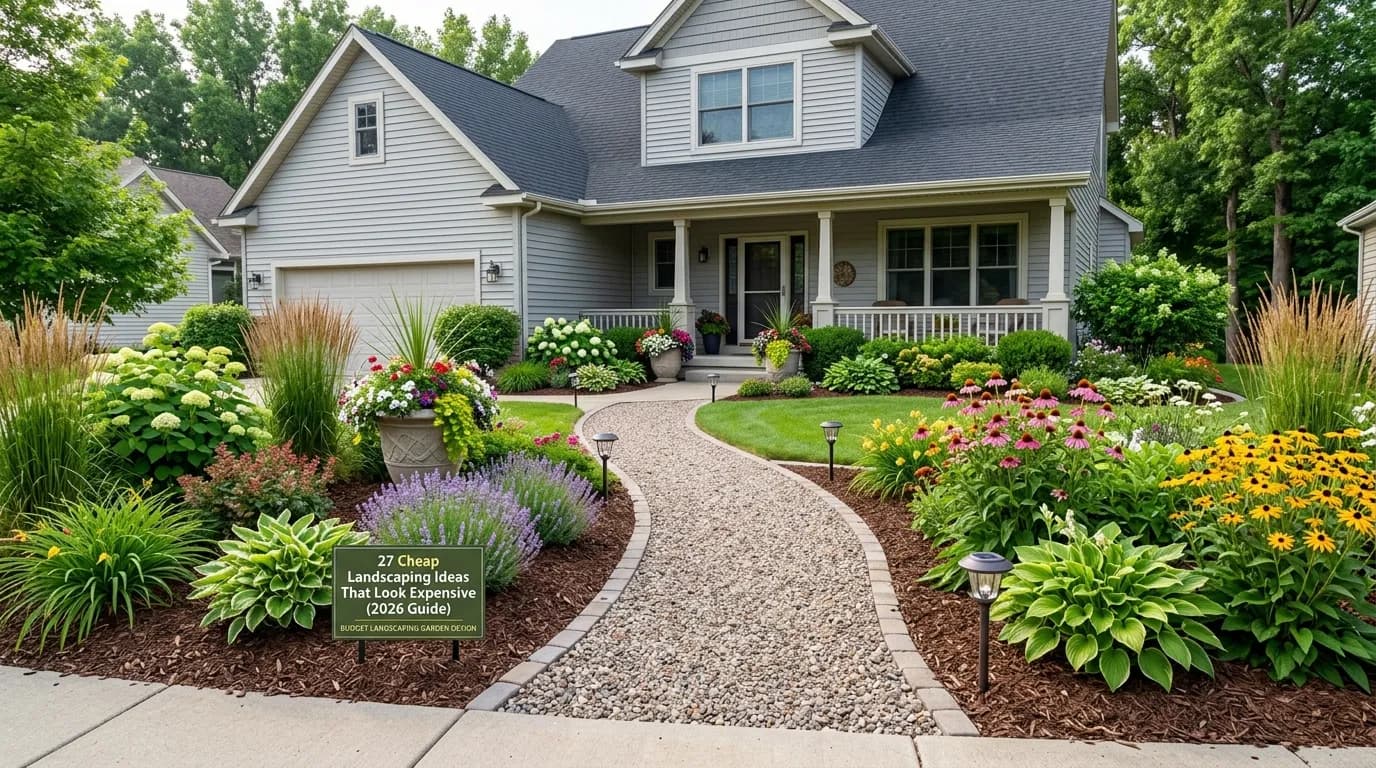
A beautiful yard doesn't require a big budget. With the right strategies, you can create a landscape that looks like it cost $10,000 for a fraction of that price. These 27 cheap landscaping ideas have been tested by real homeowners and deliver real results.
The Golden Rule of Budget Landscaping
Before spending a single dollar, design first. Homeowners who skip the planning stage waste an average of $1,200 on plants and materials that don't work together or end up in the wrong spot. Use Yardcast's free AI design tool to visualize your finished yard before buying anything — it's free to preview.
Free and Nearly-Free Landscaping Ideas
1. Get Free Plants from Neighbors and Plant Swaps
Many established plants — hostas, black-eyed Susans, ornamental grasses, irises, peonies — spread aggressively over time. Neighbors are often thrilled to have someone dig out divisions in spring or fall. Check Facebook Marketplace, Nextdoor, and local gardening groups for free plant giveaways. Plant swaps (common in spring) let you trade cuttings and divisions for nothing.
2. Grow from Seed
Seeds cost 50–200x less than nursery plants. A packet of zinnias ($3) produces 50+ plants. Sunflowers, cosmos, morning glories, black-eyed Susans, and wildflower mixes are all easy to direct-sow with no special equipment.
3. Collect Cuttings
Hydrangeas, forsythia, spirea, and most shrubs root easily from stem cuttings. Cut 6-inch stems in late spring, strip the lower leaves, dip in rooting hormone ($6 at hardware stores), and pot in moist soil. Six weeks later you have a free shrub.
4. Use Fallen Leaves as Free Mulch
Instead of bagging fall leaves, run them through a lawnmower (mulching setting) and spread 2–3 inches over beds. Shredded leaves decompose into rich soil amendment. This replaces mulch that would otherwise cost $50–$150 per year.
5. Harvest Rainwater
A basic rain barrel ($30–$60) collected on a downspout provides free irrigation water. One inch of rain on a 1,000 sq ft roof yields 620 gallons. Even one barrel makes a measurable difference on a water bill during summer.
Cheap Plants That Look Expensive
6. Ornamental Grasses
Fountain grass, blue oat grass, and switchgrass look architectural and sculptural — the kind of plants you see in luxury landscape designs. They're also among the cheapest perennials: $5–$10 per plug, spread over time, need zero maintenance, and look great 12 months a year.
7. Daylilies
Daylilies are indestructible, spread freely (more plants for nothing), bloom for months, and come in every color from yellow to deep burgundy. A flat of 25 bareroot daylilies costs $15–$25 online. Plant in mass groupings for a designer look.
8. Hostas for Shade
Hostas are the best cheap solution for shady spots where grass won't grow. Giant hostas that retail for $40 at a garden center can be found as divisions for $1–$5. A dense hosta planting eliminates the need for mulch in deep shade.
9. Coneflowers (Echinacea)
Native perennials that attract pollinators, bloom all summer, and self-seed prolifically. One $6 plant becomes a colony of 20+ plants within 3 years. They look wild and designed simultaneously.
10. Creeping Phlox for Groundcover
A low carpet of color that blooms in spring and then disappears quietly. Spreads aggressively. Buy 6 plants for $30 and fill a 10-foot slope in 3 years for nothing.
Budget Hardscaping That Looks High-End
11. Gravel Instead of Concrete
A gravel path costs $1–$3 per square foot vs. $8–$15 for poured concrete or pavers. Use 3/8" crushed stone or pea gravel with steel edging ($25 for 20 feet) for clean lines. A gravel dry creek bed doubles as drainage and looks architectural.
| Surface | Cost per Sq Ft | Installation | Durability |
|---|---|---|---|
| Poured concrete | $8–$15 | Requires contractor | 25+ years |
| Concrete pavers | $10–$20 | DIY possible | 25+ years |
| Gravel with edging | $1–$3 | Easy DIY | 10+ years |
| Stepping stones | $2–$5 | Easy DIY | 20+ years |
| Mulch path | $0.50–$1.50 | Easy DIY | Replace every 2–3 years |
12. Stepping Stones from Big-Box Stores
Concrete stepping stones ($1–$3 each at Home Depot or Lowe's) laid in a simple pattern through lawn or beds create structure and definition. Offset the pattern diagonally for a more designed look.
13. DIY Raised Beds from Cheap Lumber
Cedar 2x6s at 8 feet long run $12–$18 each. A 4x8-foot raised bed needs 4 boards = $50–$70 in lumber. Add a bag of compost ($6) and a bag of topsoil ($5) and you have a complete vegetable or flower bed. Pressure-treated lumber is cheaper but use it only for non-edible plantings.
14. Free Stone from Craigslist and Facebook Marketplace
People constantly give away flagstone, river rock, fieldstone, and boulders when they redo their own landscaping. Search "free stone" or "free rocks" on Facebook Marketplace weekly. A pallet of flagstone that would cost $150–$200 at a quarry is often available for free pickup.
15. Mulch Delivery in Bulk
Bagged mulch from hardware stores costs $4–$6 per cubic foot. Bulk delivery runs $25–$45 per cubic yard (27 cubic feet). For any job larger than 4 cubic yards, bulk delivery is dramatically cheaper. Many municipalities also offer free wood chip mulch from tree trimming operations — call your public works department.
| Mulch Source | Cost per Cubic Yard | Best For |
|---|---|---|
| Bagged from hardware store | $100–$160 | Small jobs (1–3 yards) |
| Bulk delivery | $25–$45 | Medium+ jobs |
| Municipal wood chips | Free | Paths, naturalistic areas |
| Shredded leaves | Free | Existing homeowners |
| Straw (temporary) | $8–$15 per bale | Vegetable gardens |
Cheap Landscaping Design Strategies
16. Mass Planting One Species Instead of Mixing Many
Professional landscapes look expensive because they use bold repetition — 50 of the same grass, not 50 different plants. Buy 20 of your favorite cheap perennial and plant them in a sweeping mass. It looks intentional and cohesive. Mixing 20 different species looks cluttered and amateur regardless of price.
17. Mow Crisp Edges — Free Visual Impact
The single highest-return-on-investment landscaping action is crisp edging between lawn and beds. A manual half-moon edger costs $15 and keeps edges clean for weeks. This one change makes even an average landscape look professionally maintained. Straight lines feel modern and intentional; curved edges feel naturalistic.
18. Paint Your Front Door and Shutters
Not technically landscaping, but curb appeal is curb appeal. A $40 can of exterior paint on the front door + window shutters + shutters dramatically changes how your yard is perceived. Studies show this has the highest ROI of any exterior home improvement.
19. Add Solar Pathway Lights
Solar stake lights (10-pack for $20–$30) along a walkway or driveway add night-time dimension and define the space. No wiring, no electrician. Replace the batteries yearly.
20. Use Large Containers Instead of Planting Beds
Instead of digging and amending soil for a bed, use large containers. Three large pots ($20–$40 each) grouped together with bold plants look architectural. Move them seasonally. Fill with a mix of thriller (tall, dramatic), filler (medium, full), and spiller (trailing). One bag of potting mix fills 3–4 pots.
Budget Lawn Improvements
21. Overseed Thin Areas Instead of Sodding
Sod costs $0.50–$0.80 per square foot installed ($1,500–$2,500 for a typical front lawn). Overseeding costs $0.03–$0.10 per square foot. Core aerate in fall, spread seed at the bag rate, water daily for 3 weeks. The result is indistinguishable from sodded lawn within one growing season.
22. Spot-Treat Weeds Instead of Herbicide Blankets
Broad herbicide applications ($50–$100/treatment) are rarely necessary. Buy a targeted spot-spray for $12 and treat weeds individually. This is more effective (you hit every weed) and costs 80% less.
23. Topdress with Compost Instead of Fertilizer
Broadcasting a ¼-inch layer of screened compost over lawn in spring builds long-term soil health, improves water retention, and feeds the lawn without synthetic fertilizer. A $8 bag of compost covers 50–75 square feet.
Cheap Fixes for Specific Problem Areas
24. Turn a Muddy Side Yard into a Gravel Path
Side yards between houses are typically muddy, shaded, and impossible to grow grass. Lay landscape fabric ($20 for a roll) and cover with ½ inch of pea gravel ($30–$50) for a functional, maintenance-free side yard path. Add stepping stones for extra structure.
25. Cover Ugly Fences with Fast-Growing Vines
Clematis, morning glory (annual), or Virginia creeper will cover a chain-link or wood fence within one season. Clematis starts at $8–$15 and returns larger every year. Morning glory seeds cost $2 for hundreds.
26. Terrace a Slope with Inexpensive Timber Walls
Pressure-treated 6x6 landscape timbers run $12–$18 each. Three timbers stacked two courses high create a 12-inch retaining wall that holds a garden bed on a slope. Drill through with rebar ($3 each) for stability. A 12-foot-long retaining bed costs $50–$80 in materials.
27. Plant a Living Privacy Screen with Arborvitae
Green Giant Arborvitae is the cheapest fast-growing privacy tree: grows 3–5 feet per year, tolerates most soils, and provides year-round screening. Bare root seedlings are available online for $3–$5 each during spring planting season. Plant 5–8 feet apart; in 5 years you have a 15-foot-tall privacy wall.
The Cheap Landscaping Budget Breakdown
Here's how to allocate a $500 budget for maximum impact:
| Category | Budget | What It Gets You |
|---|---|---|
| Design (planning) | $0 | Yardcast AI preview — free |
| Mulch (bulk) | $80 | 2–3 yards covers most beds |
| Plants (perennials) | $150 | 20–30 plants from online nurseries |
| Edging (steel) | $40 | 40 feet of crisp edges |
| Gravel path | $60 | A 4'×20' path with edging |
| Stepping stones | $30 | 10 stones for a walkway |
| Seeds | $20 | 5 packets of annuals |
| Containers | $60 | 3 large pots |
| Solar lights | $25 | 10-pack for walkway |
| Contingency | $35 | Surprise expenses |
| Total | $500 | A completely transformed entry |
See Your Cheap Landscaping Plan Before You Buy Anything
The biggest mistake budget landscapers make is buying plants before visualizing the finished design. You can end up with the right plants in the wrong places — or the right design elements in the wrong proportions.
Try Yardcast free to generate 3 AI landscape designs based on photos of your actual yard. See exactly what each design would look like overlaid on your property before spending a dollar. The preview is completely free — you only pay if you want to download the full plant list, cost breakdown, and contractor-ready PDF.
Upload your photos now and see your cheap landscape transformation in 60 seconds. →