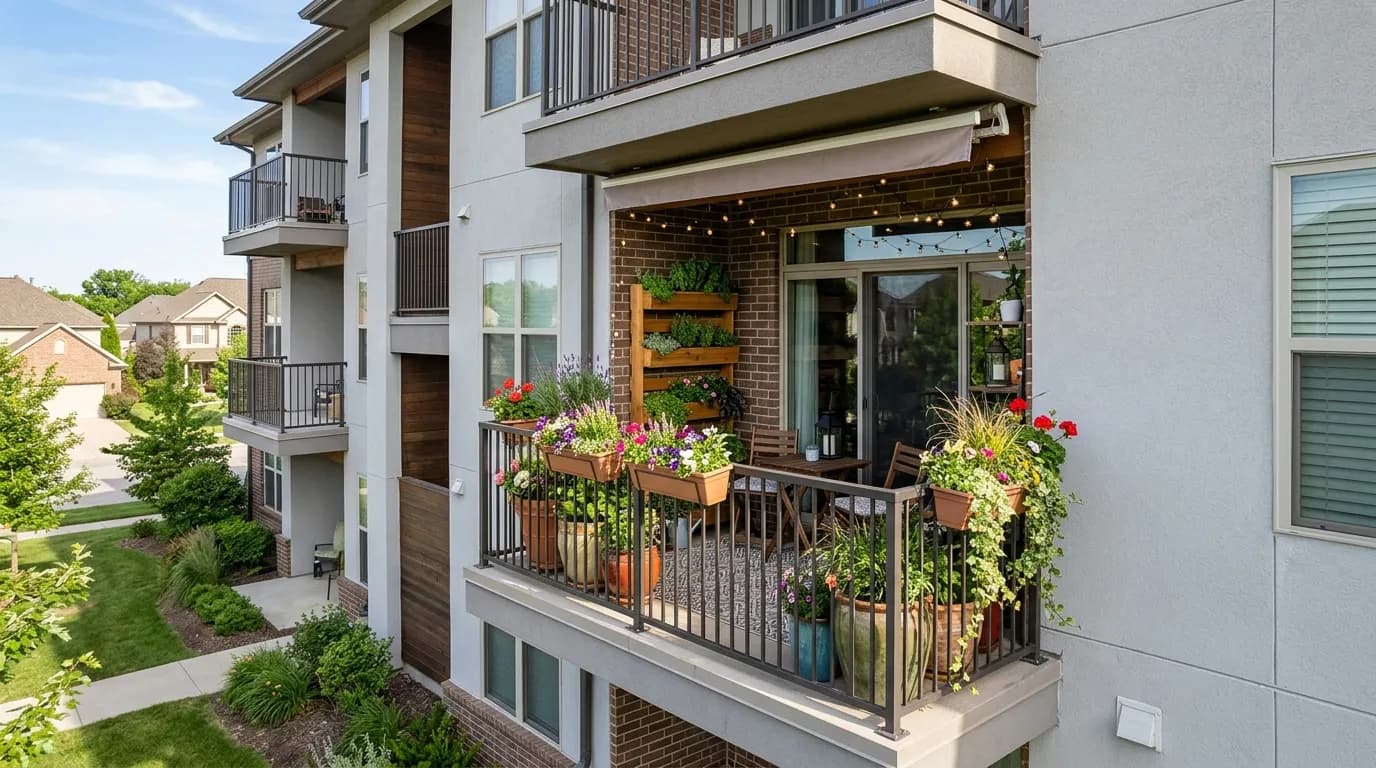
Your balcony is one of the most overlooked spaces in any apartment or condo. With the right approach, even a 5×8 foot concrete ledge can become a lush, functional outdoor room — with container gardens, vertical plantings, a seating spot, string lights, and herbs you actually cook with.
The key difference between a thriving balcony garden and a disappointing one isn't the space — it's the approach. This guide covers 35 specific ideas organized by plant type, design goal, and function, with the practical details (weight limits, drainage, sun assessment) that most balcony garden guides skip.
[See what a designed outdoor space looks like at your scale →](/redesign) Yardcast generates AI landscape designs for yards of all sizes — including small urban spaces and patio concepts.
Before You Start: The Balcony Garden Basics
Check Your Sun Exposure
Sun is everything in a container garden. Before buying a single plant, observe your balcony at different times of day:
- Full sun: 6+ hours of direct sun. You can grow almost anything — tomatoes, herbs, flowers, ornamentals.
- Partial sun/partial shade: 3–6 hours. Great for herbs, leafy greens, most flowers, and shade-tolerant perennials.
- Full shade: Under 3 hours. Stick to shade-lovers: ferns, impatiens, begonias, coleus, astilbe.
Also note which direction you face:
- South-facing: Maximum sun, warmest in winter, best for heat-lovers
- East-facing: Morning sun, afternoon shade — ideal for many plants
- West-facing: Afternoon sun, can be very hot in summer
- North-facing: Shade all day — most challenging but workable with the right plants
Understand Your Weight Limits
This is the most overlooked factor in balcony gardening. Structural weight limits are typically 40–60 pounds per square foot for residential balconies — but large planters filled with wet soil can weigh 100+ pounds. Check with your building management or a structural engineer for your specific limits.
Weight-saving strategies:
- Use lightweight potting mix (never garden soil — it compacts and becomes heavy when wet)
- Choose fabric grow bags over heavy ceramic pots
- Use foam packing peanuts or empty water bottles in the bottom of large planters (under a layer of landscape fabric) to reduce total weight while maintaining drainage
- Distribute weight evenly rather than concentrating it in one corner
Drainage and Building Rules
Most balconies need saucers or drainage trays under pots to prevent water from running onto the neighbor below. Check your building rules — many buildings require saucers and restrict certain types of planters, structures, or weight. This matters especially for hanging planters, which can drip consistently in rain.
35 Balcony Garden Ideas
Container and Planter Ideas
1. Create a focal point with one large statement planter. Instead of many small pots (which look cluttered and dry out fast), use one or two oversized containers as anchors. A 24-inch diameter pot with a dramatic tropical plant — a bird of paradise, a large ornamental grass, or a standard-trained rosemary — anchors the whole space.
2. Use tiered plant stands. A three-tier plant stand takes 1 square foot of floor space and holds 9–12 pots vertically. This is one of the highest-impact moves for small balconies — it multiplies your growing surface without multiplying your footprint.
3. Mix container heights for visual depth. Place tall containers or tall plants at the back or corners, medium plants in the middle, and trailing plants (petunias, sweet potato vine, million bells) spilling over container edges in the front. This layered approach makes any balcony feel designed rather than randomly arranged.
4. Match container style to your aesthetic. Terracotta and weathered wood for a Mediterranean or cottage feel. Black or charcoal planters for a modern, graphic look. Bright-colored pots for a bohemian or tropical style. White for a clean, Nordic or contemporary vibe. Consistency in container style (even if sizes vary) makes the space look cohesive.
5. Try fabric grow bags. Fabric grow bags (available in 5–25 gallon sizes) are cheaper than ceramic, significantly lighter, and actually produce better plant growth — the fabric "air prunes" roots, preventing circling, and the breathable material regulates temperature. They look rustic-casual; use them for vegetables and herbs.
6. Use window boxes along railings. Railing-mounted window boxes (with clamp brackets that attach to railing tops) extend your growing surface beyond the floor without adding weight to the deck. Fill them with cascading plants — trailing petunias, bacopa, calibrachoa — for a lush, hanging garden effect.
7. Cluster plants in groups of 3 or 5. Odd-number groupings of containers look more natural and intentional than even numbers. Try three pots of graduating sizes, or five pots of the same style with varying plants.
Herbs and Edible Garden Ideas
8. Dedicate one planter to a complete herb kitchen garden. A 24-inch window box or large rectangular planter can hold basil, rosemary, thyme, oregano, chives, and parsley — everything you need for everyday cooking. Position it near your sliding door for easy harvesting while cooking.
9. Grow cherry tomatoes in 5-gallon containers. Cherry tomatoes (Sun Gold, Sweet Million, Tumbling Tom — a trailing variety specifically bred for containers) produce prolifically in containers. Give them full sun, a cage or stake, and consistent watering. One plant per 5-gallon container; use self-watering pots to buffer the high water demand.
10. Grow lettuce and greens in shallow containers. Lettuce, spinach, arugula, and kale have shallow roots — they thrive in window boxes and planters as shallow as 6–8 inches. They're fast-growing (harvest in 4–6 weeks), ideal for cool weather (spring and fall on most balconies), and one of the most cost-effective garden crops.
11. Plant a strawberry tower. Vertical strawberry planters (with planting pockets on the sides) produce 20–30 strawberries per week in peak season from a single 2-square-foot footprint. They look beautiful, the hanging fruit is dramatic, and strawberries in containers taste better than grocery store.
12. Try a self-watering herb planter. Self-watering planters have a water reservoir in the base that wicks moisture upward through a wick. They reduce watering frequency from daily (in summer for standard pots) to weekly, which is a game-changer for apartment gardeners who travel.
13. Grow a dwarf citrus tree. Dwarf citrus (meyer lemon, calamansi, kumquat, dwarf orange) thrives in large containers in full sun. They're beautiful year-round, fragrant when blooming, and produce real fruit. They need 10–15 gallon containers, good drainage, and winter protection in USDA Zones 8 and below.
Mid-season garden redesign? [See AI-generated design concepts for your outdoor space — including small balconies and patios →](/redesign)
Flower and Ornamental Ideas
14. Plant a thriller-filler-spiller combination. The classic container design formula: one "thriller" (tall, dramatic focal plant), one "filler" (mounding plant that fills the middle), and one "spiller" (trailing plant that cascades over the edge). Examples: canna lily + lantana + sweet potato vine. Ornamental grass + zinnia + million bells.
15. Use annuals for season-long color. Petunias, zinnias, marigolds, impatiens, and geraniums bloom continuously from spring through frost with regular deadheading. For full-season color with minimal effort, choose wave petunias (self-cleaning, no deadheading needed) or calibrachoa (also self-cleaning, massive bloom production).
16. Add a bold tropical accent. Elephant ears (Colocasia), bird of paradise, bananas, and canna lilies create an instant tropical feel and look impressive in large containers. Most are not frost-hardy and need to come indoors over winter, but they're container stalwarts in warm climates and worth the effort in cool climates.
17. Plant a scented container garden. Position fragrant plants near your seating: lavender, gardenia (shade-tolerant in summer), sweet alyssum, heliotrope, jasmine, or chocolate mint (also edible). On a warm evening, a balcony that smells like lavender and jasmine is one of life's underrated pleasures.
18. Try ornamental peppers. Ornamental pepper plants (Capsicum annuum ornamental varieties) produce dozens of colorful, upright fruits in shades of purple, orange, yellow, and red — simultaneously. They're dramatic, edible (but very hot), low-maintenance, and sun-loving. Perfect for a small-space conversation piece.
19. Plant a pollinator container. Fill a large planter with pollinatorattracting plants: purple coneflower, salvia, agastache, lantana, catmint, and zinnias. Even on an upper-floor balcony, these plants attract bees and butterflies and create a wildlife-supporting garden in a small space.
Vertical Garden Ideas
20. Install a vertical planter system on the wall. Living wall panels, pocket planters, or modular vertical systems mount to the wall and hold 20–40 plants in a 3×4 foot vertical footprint. Use them for herbs, succulents, or a mix of trailing and mounding annuals. They're the single most dramatic transformation possible for a small balcony.
21. Train climbers on a trellis. A freestanding trellis (or wall-mounted trellis) with a climbing plant — jasmine, black-eyed Susan vine, morning glory, clematis — adds height, privacy, and vertical interest without taking floor space. A 6-foot trellis with jasmine in full bloom is extraordinary.
22. Use a ladder plant stand. A leaning ladder shelf (like a towel ladder but for plants) is inexpensive, requires no installation, and holds 5–10 plants vertically. It leans against the wall and works on any flat surface.
23. Hang macramé plant hangers. Wall-mounted or ceiling-mounted hooks with macramé plant hangers are affordable, bohemian, and maximize vertical space. They work best for trailing plants (pothos, string of pearls, tradescantia) and small-medium pots (under 6 inches). Check ceiling weight limits before hanging.
24. Mount a pegboard planter system. An exterior-rated pegboard with planter attachments is a DIY solution that holds herb pots, small succulents, and tools on a single wall-mounted panel. It looks organized and intentional, doubles as storage, and keeps floor space clear.
Privacy and Enclosure Ideas
25. Create a balcony privacy screen with tall plants. Bamboo (clumping varieties like Fargesia, not running bamboo), arborvitae, ornamental grasses, and large-format tropical plants all create natural privacy screens when placed in containers along the railing. Position a row of 5–6 tall planters to create a living wall between you and the neighbor's view.
26. Install a bamboo or wicker privacy screen. Freestanding bamboo panels or roll-out bamboo/reed fencing attached to the railing create instant privacy without adding plant weight. They're inexpensive ($30–$80 for a section), easy to install, and look warm and natural.
27. Hang an outdoor curtain. Ceiling-mounted curtain rods with UV-rated outdoor curtains (canvas, Sunbrella, or polyester) create enclosed, cozy outdoor rooms. They're one of the most dramatic privacy solutions for uncovered balconies that can support overhead hardware.
28. Use a trellis with climbing vines for a living privacy screen. A freestanding trellis panel along the open side of the balcony with climbing jasmine, hops, or black-eyed Susan vine creates a living, fragrant privacy wall in one growing season.
Lighting and Atmosphere
29. Add string lights for evening ambiance. Outdoor-rated globe string lights transform any balcony after dark. Hang them overhead (if you have ceiling attachment points) or string them between railing posts or hook screws. Warm white (2700K) creates the most welcoming atmosphere.
30. Use solar lanterns and candle holders. Solar-charged lanterns (no wiring needed) placed among plant groupings add warm light at night. Mix with a few real candles in hurricane holders for genuine candlelight warmth.
31. Add a string of outdoor LED fairy lights through plants. Tucking battery-operated or solar-powered fairy lights through trailing plants, along railings, or through a trellis with climbing vines creates a magical, cohesive effect at night.
Furniture and Layout Ideas
32. Choose furniture that doubles as storage. Outdoor storage benches, ottomans with interior storage, and side tables with shelves all expand functional square footage. In a 5×8 foot balcony, every piece needs to earn its place.
33. Use a bistro table and chairs set. A small folding bistro set (table + 2 chairs) is the perfect scale for most balconies. It creates a dining/coffee spot without dominating the space. Foldable options can be stored flat when not in use to free up room for entertaining.
34. Add a narrow console table against the wall. A wall-mounted or narrow freestanding console table (12 inches deep × 36–48 inches long) provides surface space for plants, lanterns, and a morning coffee spot without extending far into the floor space.
35. Create a reading nook with a single chair and side table. Even the smallest balcony can hold one comfortable chair (a folding sling chair, a low-profile outdoor armchair, or a hammock chair hung from a ceiling hook) with a side table and a small plant grouping. This single-chair arrangement transforms a forgotten concrete space into somewhere you actually want to be.
Balcony Garden Maintenance Tips
Watering in containers: Container plants dry out 2–4× faster than in-ground plants because the walls of the pot heat up and roots can't follow moisture deeper. In summer, most containers need watering every 1–2 days. Self-watering pots, drip irrigation from a timer, and moisture-retaining soil amendments (like perlite or coir) all reduce watering frequency.
Fertilizing containers: Potting mix has limited nutrients that get flushed out with repeated watering. Use slow-release granular fertilizer (like Osmocote) at planting and liquid fertilizer (fish emulsion, seaweed, or balanced synthetic) every 2–3 weeks through the growing season.
Repotting: Most container plants need to be repotted up one size (never more) every 2–3 years. Signs it's time: roots growing through drainage holes, plant drying out very fast, or growth stalling.
Winter protection: In cold climates, ceramic pots can crack when soil freezes. Move tender plants indoors. Store empty ceramic pots inside or wrap them in burlap. Hardy perennials in containers may need extra insulation (wrapping the pot with bubble wrap or burlap) since they don't have the insulation of surrounding soil.
Design Your Balcony Space with AI
Whether you're starting from scratch or looking to upgrade what you have, seeing design concepts for your specific space is the fastest way to move from overwhelmed to excited.
[Visit Yardcast → upload a photo of your balcony or outdoor space and get three AI-generated design concepts in 60 seconds →](/redesign)
Free to preview. You'll see plant combinations, furniture layouts, and container arrangements designed around your actual space, sun exposure, and style preferences.
FAQ: Balcony Garden Ideas
Q: What plants are best for a balcony garden?
A: The best balcony plants depend on your sun exposure. For full sun: petunias, geraniums, herbs (basil, rosemary, thyme), tomatoes, zinnias. For partial shade: impatiens, begonias, ferns, hostas, leafy greens. For full shade: astilbe, coleus, trailing ivy, caladiums. For every balcony: succulents and sedum (drought-tolerant, low maintenance).
Q: How do I garden on a small balcony?
A: Go vertical. Tiered plant stands, wall-mounted planters, railing-mounted window boxes, and trellis systems multiply your growing surface without multiplying floor space. Use a few large containers rather than many small ones (they stay moist longer and look more intentional).
Q: Can you grow vegetables on a balcony?
A: Yes, with 6+ hours of direct sun. Cherry tomatoes, lettuce, spinach, herbs, peppers, and beans all thrive in containers. Use 5-gallon containers minimum for tomatoes and peppers, self-watering planters for consistent moisture, and fertilize every 2 weeks through the growing season.
Q: What is the weight limit for balcony planters?
A: Most residential balconies support 40–60 pounds per square foot. A large 24-inch ceramic pot with wet soil can weigh 100+ pounds. To stay safe: use lightweight potting mix (never garden soil), choose fabric grow bags or lightweight plastic/fiberglass pots, and distribute weight across the whole balcony rather than concentrating it. When in doubt, ask your building management.
Q: How do I add privacy to my balcony with plants?
A: Use tall containerized plants along the railing: clumping bamboo (Fargesia varieties), ornamental grasses, arborvitae, or large tropical plants. Supplement with a trellis and climbing vine for a living privacy screen that fills in over one season. Bamboo roll-up reed fencing is also fast, inexpensive, and effective.
Q: How do I water balcony plants when I travel?
A: Self-watering planters with built-in reservoirs reduce watering frequency to weekly. Drip irrigation on a battery-powered timer ($30–$60) handles watering automatically. Terracotta watering spikes (fill a wine bottle with water, insert the spike, push into soil) provide 3–7 days of slow watering. For extended trips, ask a neighbor.
Q: What's the best soil for balcony containers?
A: Use quality potting mix (not garden soil, which compacts in containers and becomes waterlogged). For edibles, add perlite (20%) for drainage and slow-release fertilizer at planting. For drought-tolerant plants and succulents, use cactus/succulent mix or add extra perlite and coarse sand to standard potting mix.
Q: How do I make my balcony look like a garden?
A: Layer heights (tall plants at back/corners, medium in middle, trailing plants in front), cluster pots in groups of 3–5, use consistent container style/color, add string lights and candlelight for evening ambiance, include a fragrant plant near seating, and add one large statement piece (a dramatic tropical plant, an oversized planter, or a vertical living wall panel) as a focal point.