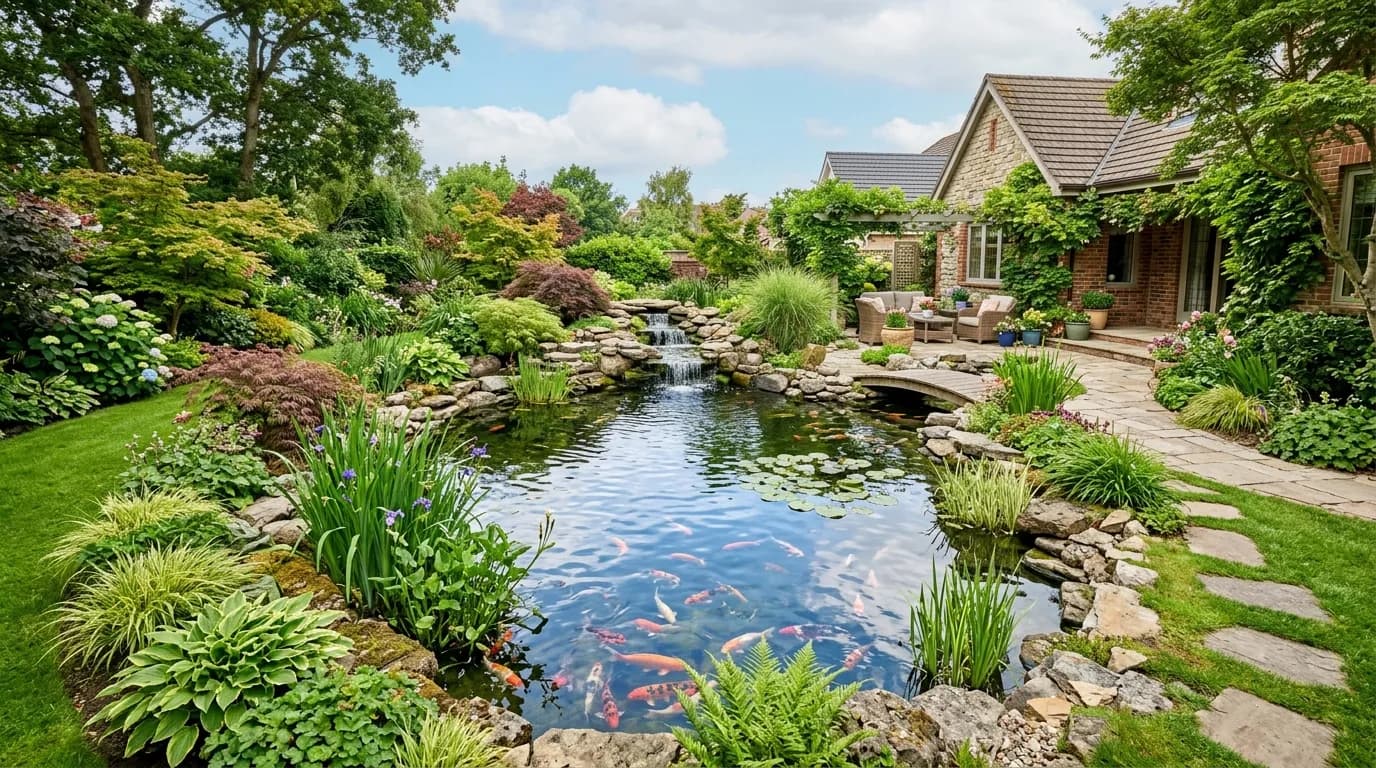
A backyard pond is one of the most transformative features you can add to an outdoor space. The sound of moving water, the flash of koi, the dragonflies hovering over lily pads — a well-designed pond turns a backyard into a living ecosystem you never want to leave. Whether you have 200 square feet or 2,000, there's a pond design that fits your space, budget, and maintenance tolerance.
This guide covers 35 backyard pond ideas, from tiny container ponds for apartment patios to sprawling naturalistic wildlife ponds, along with everything you need to know about costs, plants, fish, and construction.
Small Backyard Pond Ideas (Under 100 sq ft)
1. Half-Barrel Container Pond
A 25–30 gallon whiskey barrel or stone planter makes an instant pond. Add a small submersible fountain, a few water lilies, and 2–3 goldfish. Cost: $80–$200. Works on patios, decks, and small urban gardens.
2. Miniature Bog Garden
A shallow 50–70 gallon pond (8–12 inches deep) planted densely with bog plants — cattails, iris, pickerelweed, water hyacinth — creates a lush, wildlife-friendly feature. No fish needed. Cost: $150–$400.
3. Disappearing Pondless Water Feature
Love the sound of water but don't want maintenance? A pondless waterfall recirculates water through gravel and boulders with no exposed surface. Zero mosquitoes, zero fish care. Cost: $800–$2,500 installed.
4. Preformed Pond Shell
Rigid preformed pond liners in sizes from 50 to 250 gallons are the fastest DIY option. Dig a hole, drop it in, edge with rocks. Done in a weekend. Cost: $80–$350 for the shell, plus $200–$600 for pump, plants, and edging.
5. Raised Pond with Timber or Block Surround
A raised pond built above ground with railroad ties, concrete blocks, or treated timber doubles as a seating wall. Great for small yards because it doesn't require excavation. Cost: $500–$2,500 DIY.
Medium Backyard Pond Ideas (100–500 sq ft)
6. Naturalistic Wildlife Pond
Irregular kidney or teardrop shape, gently sloping edges, planted margins — this pond style attracts frogs, turtles, dragonflies, and birds. No formal edging, no fish, just ecosystem. Use a flexible EPDM liner and native marginal plants. Cost: $1,500–$5,000 DIY, $4,000–$12,000 installed.
7. Formal Rectangular Pond
A clean rectangle or square pond with stone or concrete coping looks stunning in formal or contemporary gardens. Add a wall fountain or jets. Perfect with a terrace setting. Cost: $3,000–$10,000 installed.
8. Reflecting Pool
Shallow (12–18 inches), dark-lined, and surrounded by minimalist planting — a reflecting pool creates zen drama in modern landscapes. Best with floating plants like water lilies. Cost: $2,500–$8,000.
9. Stream + Plunge Pool Combo
A recirculating stream meanders through the garden before falling into a small plunge pool. Adds sound, movement, and a naturalistic feel to sloped yards. Cost: $3,000–$8,000 DIY, $6,000–$15,000 installed.
10. Waterfall Feature Pond
A waterfall spilling over stacked boulders into a 200–300 gallon pond is the most popular water feature in American backyards. The waterfall aerates the water, discourages algae, and creates ambient sound. Cost: $2,500–$6,000 installed.
Koi Pond Ideas
11. Traditional Koi Pond
Minimum 1,000 gallons, 3–4 feet deep, with powerful filtration. Koi grow 12–24 inches and produce significant waste — filtration is not optional. Add UV clarifier for clarity, supplemental aeration, and shade plants to keep water cool. Cost: $5,000–$15,000 installed.
12. Koi Pond with Viewing Bridge
A timber or stone bridge across a koi pond allows you to feed fish from above and creates a focal point in the garden. Best in ponds 20–30 feet across. Cost: $8,000–$20,000+.
13. Japanese Koi Garden
Combine a koi pond with Japanese garden elements — raked gravel, stone lanterns, clipped azaleas, ornamental bridge, pine bonsai, bamboo spouts. The most meditative garden style for a reason. Cost: $10,000–$40,000+ for a complete installation.
14. Low-Maintenance Koi Ecosystem Pond
An Aquascape-style ecosystem pond uses a combination of biological filtration, aquatic plants, and fish to self-regulate water quality with minimal maintenance. Weekly top-up and monthly skimmer cleaning is typically all that's needed. Cost: $6,000–$18,000 installed.
15. Raised Koi Pond with Deck Surround
A raised concrete or block koi pond at 24–30 inch height means no bending to feed fish and natural predator deterrence (herons can't wade in). A deck surround makes it an entertainment centerpiece. Cost: $8,000–$25,000.
> Want to see how a pond would look in YOUR backyard? Generate a free AI landscape design → — upload your yard photos and get 3 photorealistic designs with water feature options in under 60 seconds.
Wildlife Pond Ideas
16. Frog and Toad Pond
Shallow (6–18 inches), gently sloped edges, no fish (fish eat tadpoles), native aquatic plants. Add log piles, rocks, and a brush pile nearby for habitat. You'll hear frogs within one season. Cost: $300–$1,500 DIY.
17. Bird Bath Pond with Dripper
A larger in-ground birdbath (3–4 feet across, 2–3 inches deep) with a solar dripper or fountain creates the most bird activity of any garden feature. Birds need shallow water with firm footing. Cost: $200–$800.
18. Native Wetland Pond
Planted entirely with regional native aquatic and semi-aquatic plants — native irises, native sedges, swamp milkweed, native arrowhead — a native wetland pond supports pollinators, frogs, and birds with zero maintenance after establishment. Cost: $1,000–$5,000 depending on size.
19. Dragonfly Habitat Pond
Slightly deeper than a frog pond (18–30 inches), with submerged plant stems for dragonfly larvae to crawl up during hatching, native aquatic plants for egg-laying, and open sun exposure. A dragonfly pond reduces mosquitoes naturally by up to 95%. Cost: $500–$2,000 DIY.
Pond Plant Ideas
The right plants are what make a backyard pond look finished — and they do real work too, filtering nutrients, shading water to reduce algae, and creating habitat.
20. Water Lilies (Surface Coverage)
Hardy water lilies (Nymphaea) bloom spring through fall and shade 50–70% of the pond surface, reducing algae explosively. Choose white, pink, yellow, or magenta. Plant in submersible baskets, 18–24 inches deep. Cost: $15–$40 per plant.
21. Lotus (Spectacular Focal Plant)
American Lotus or Asian Lotus produces dinner-plate-sized blooms above the water surface — one of the most dramatic plants in any garden. Needs warm water, full sun, and room to spread. Cost: $20–$60 per tuber.
22. Iris (Marginal Plant)
Yellow flag iris, Japanese water iris, and Louisiana iris grow at the pond's edge, providing vertical accent and spectacular spring flowers. They naturalize quickly. Cost: $8–$20 per plant.
23. Pickerelweed (Native Marginal)
Intense blue-purple flower spikes throughout summer, loved by pollinators. Native to eastern North America. Very easy to grow in 0–6 inches of water. Cost: $8–$15 per plant.
24. Cattails (Structure and Wildlife)
Common or narrow-leaf cattails provide vertical structure, nesting material for birds, and dramatic winter silhouette. Use narrow-leaf cattail (Typha angustifolia) in smaller ponds — common cattail spreads aggressively. Cost: $8–$15 per plant.
Pond Edging and Surround Ideas
25. Natural Boulder Edging
Stack locally-sourced boulders and fieldstone around the pond perimeter. Plant creeping groundcovers (creeping Jenny, ajuga, thyme) in crevices. Most naturalistic look. Cost: $500–$3,000 for rocks.
26. Flagstone Surround
Irregular flagstone (bluestone, limestone, slate) set with tight joints or moss planted in gaps creates a formal-casual look that ages beautifully. Cost: $1,500–$4,000 for 200 linear feet.
27. Gravel Beach Entry
A gradual gravel-to-water transition with pea gravel or river rock on one end of the pond creates an entry point for wildlife and a naturalistic, unconstrained aesthetic. Cost: $200–$600.
28. Timber Deck Overhang
A floating deck section that cantilevers 18–24 inches over the pond edge creates an intimate connection with the water. Add built-in lighting. Cost: $2,000–$8,000.
Pond Lighting Ideas
29. Underwater LED Lights
Submersible LED lights illuminate koi and plant life from below — especially dramatic after dark. Install 2–4 lights in a 200-gallon pond. Cost: $50–$200 for DIY kits.
30. Waterfall Lighting
Warm-white LED spotlights angled at the waterfall create a glowing nighttime focal point. Run conduit when building the waterfall — retrofitting is difficult. Cost: $150–$600.
31. Path Lighting to the Pond
Low-voltage path lights leading to the pond extend the outdoor living experience into the evening. Cost: $200–$800 for a typical run.
Pond Cost Guide
| Pond Type | DIY Cost | Professional Install |
|---|---|---|
| Container / half-barrel pond | $80–$250 | N/A |
| Small preformed pond (50–200 gal) | $300–$800 | $1,500–$3,500 |
| Medium naturalistic pond (500 gal) | $1,000–$3,000 | $4,000–$10,000 |
| Waterfall + pond combo | $1,500–$4,000 | $4,000–$12,000 |
| Koi pond (1,000+ gal) | $2,500–$6,000 | $6,000–$18,000 |
| Japanese koi garden | $5,000–$15,000 | $15,000–$50,000+ |
| Pondless waterfall | $800–$2,500 | $2,500–$6,000 |
Koi, large pumps, high-end filtration, and natural stone are the biggest cost variables.
Pond Maintenance Overview
Weekly: Remove debris from skimmer, check water level, feed fish (koi/goldfish).
Optional upgrade: Test water chemistry (pH 7.0–8.5, ammonia 0 ppm, nitrites 0 ppm), clean filter media (don't scrub — just rinse in pond water to preserve beneficial bacteria), remove excess algae.
Seasonally: Fall — net leaves, reduce feeding as water cools below 55°F. Winter — in freezing climates, install a pond de-icer or aerator to keep a breathing hole open. Spring — deep clean, check pumps, reintroduce fish after a water quality test.
A well-designed ecosystem pond with adequate aquatic plants and fish can be nearly self-maintaining after the first year.
5 Most Common Pond Mistakes
- 1Too small: A pond under 50 gallons swings wildly in temperature and chemistry — harder, not easier to maintain. Go bigger than you think you need.
- 2No shade: 50–70% surface coverage with aquatic plants is not optional. Without it, you'll fight algae constantly.
- 3Undersized pump: Rule of thumb — your pump should cycle the full pond volume once per hour. For koi, twice per hour.
- 4No gradual entry: Wildlife ponds need at least one gradually sloped edge (15–20 degrees) so animals can exit. Straight walls trap frogs and small mammals.
- 5Wrong liner: PVC liners crack within 5–10 years. Use 45-mil EPDM rubber — it lasts 20–30 years and is fish-safe.
Getting Your Backyard Pond Started
The best backyard pond is the one you'll actually build. Start with the features that matter most to you: if you love the sound of water, a pondless waterfall might be perfect. If you want fish, plan for the filtration they need. If wildlife habitat is the goal, a simple lined depression with native plants will attract frogs, dragonflies, and birds within a single season.
See how a pond would look in your yard with an AI landscape design →