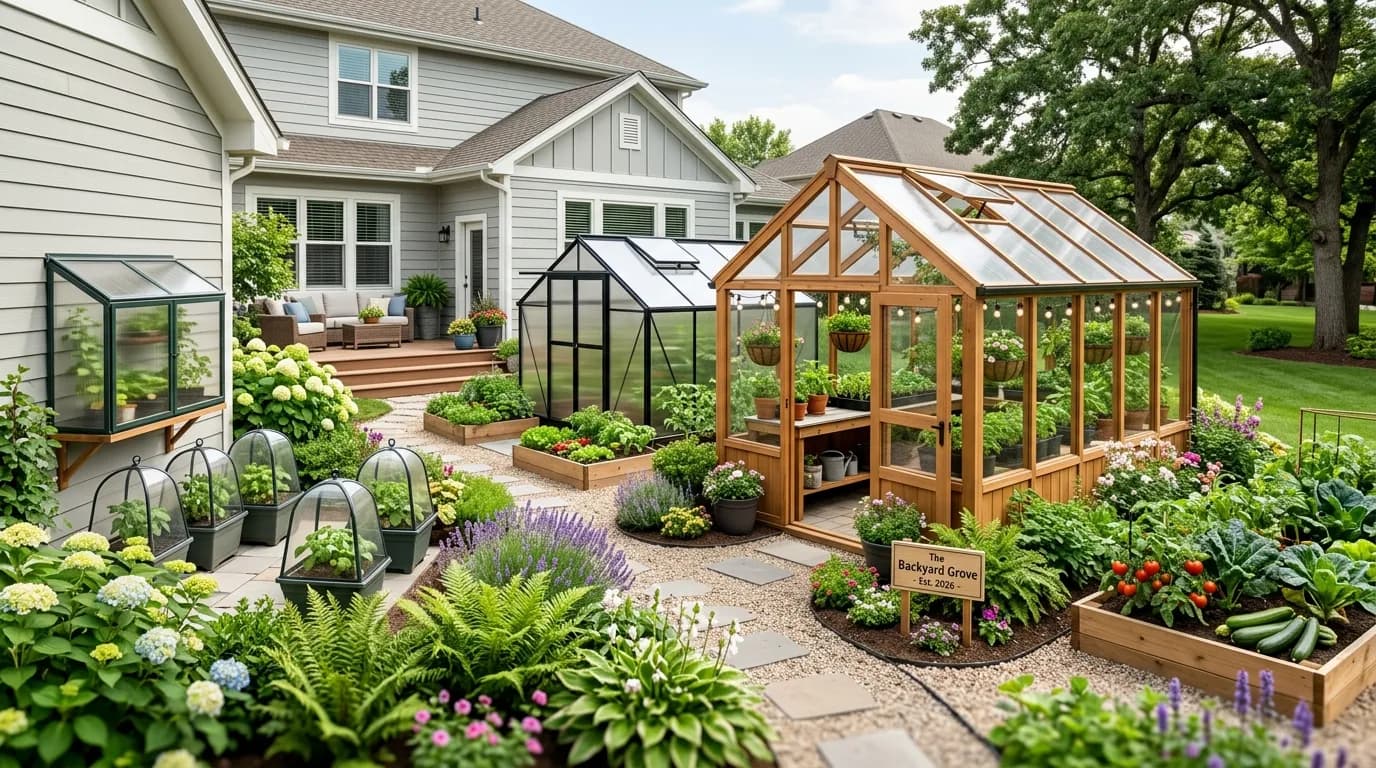
A backyard greenhouse is one of the most rewarding additions to any home — it extends your growing season, protects plants from frost, and turns a corner of your yard into a productive, beautiful space you'll use year-round. Whether you want a small cold frame to get a head start on spring seedlings, a mid-size polycarbonate greenhouse kit for under $1,500, or a full custom glass structure, there's an option for every budget and yard size.
This guide covers 35 backyard greenhouse ideas sorted by size and budget — plus everything you need to know about materials, heating, ventilation, what to grow, and how to design the greenhouse into your broader landscape.
Why Add a Greenhouse to Your Backyard?
A greenhouse gives you several major advantages over outdoor gardening:
- Year-round growing: Grow tomatoes in December, lettuce in February, herbs all winter
- Season extension: Start seeds 6–8 weeks earlier than outdoor planting dates, continue harvesting 6–8 weeks later in fall
- Plant protection: Keep tender tropicals alive over winter (citrus, hibiscus, bougainvillea)
- Pest & weather control: Hail, late frosts, and insect pressure become non-issues
- Propagation: Root cuttings, grow seedlings, overwinter perennials
- Microclimate creation: Even an unheated greenhouse runs 10–20°F warmer than outside on cold nights
And aesthetically? A well-designed greenhouse is beautiful. It becomes a focal point in the landscape — especially vintage-style glass houses, painted timber frames, or a sleek modern aluminum structure with poured concrete floors.
Greenhouse Ideas by Budget
Under $500: Cold Frames & Mini Greenhouses
1. Cold Frame Box
The simplest greenhouse: a bottomless box (wood or cinder block) with an old window or polycarbonate lid. Costs $20–$80 in materials. Warms soil by 10°F, perfect for overwintering spinach, kale, and lettuce in zones 5–7.
2. Hoop House Row Cover
Bend 10-gauge rebar or PVC conduit into arches, stretch row cover fabric or greenhouse poly film over it, and clip at the ends. A 4×20 ft hoop tunnel costs under $100 in materials and extends your season by 4–6 weeks.
3. Mini Portable Greenhouse (Shelf-Style)
A 4-tier plastic-framed greenhouse with zippered clear cover. Available at big-box stores for $50–$150. Great for a patio or deck — holds 20–30 seedling trays. Not frost-proof below about 20°F, but excellent for starting seeds and protecting tender plants in early spring.
4. PVC Geodesic Dome Cold Frame
Build a small geodesic dome (6–8 ft diameter) from PVC pipe connectors and cover with greenhouse film. Materials: under $200. Surprisingly strong, handles snow load, and looks striking. Great DIY project — kits are available for $150–$250.
5. Repurposed Window Cold Frame
Collect old single-pane windows from salvage stores (often free or $5–$10 each). Frame them with 2×8 lumber into a slanted cold frame box. This is the classic Victorian kitchen garden cold frame — beautiful, free, functional.
$500–$2,000: Polycarbonate Greenhouse Kits
These are the most popular entry-level greenhouses. Aluminum frames with twin-wall polycarbonate panels (6mm or 10mm) insulate better than single-pane glass, resist impact, and cost a fraction of glass construction.
6. 6×8 ft Polycarbonate Kit ($500–$900)
The standard starter greenhouse. Fits 1–2 people comfortably. Enough space for seed starting trays on one side and a few potted tomatoes on the other. Popular brands: Palram Harmony, Vitavia, Juliana Compact.
7. 8×12 ft Polycarbonate Greenhouse ($900–$1,400)
The sweet spot for most home gardeners — enough space to divide into zones (seedlings, vegetables, overwintering tropicals). A 4 ft-wide potting bench on one side, grow beds on the other.
8. Lean-To Greenhouse Against Your House ($600–$1,500)
Attached to an exterior wall, a lean-to greenhouse borrows heat from the house, reducing heating costs dramatically. Perfect for a south- or east-facing wall. 8×10 ft is a common size. Some municipalities classify these differently than freestanding structures — check permits.
9. Victorian-Style Aluminum and Glass Kit ($1,200–$2,500)
Some kit manufacturers offer decorative Victorian-style greenhouse kits with ridge caps, finials, and curved glass. The aesthetic upgrade is significant — these look like custom-built structures.
10. Gothic Arch Greenhouse (Hoop Style) ($400–$1,200)
Gothic arch (pointed top) poly greenhouses are popular for their superior snow-shedding ability. Great for cold climates. Available in kits from 10×12 to 14×48 ft.
Thinking about how your greenhouse fits into your overall outdoor space? Yardcast generates photorealistic AI landscape designs for your entire yard — including greenhouse placement, garden pathways, raised beds, and outdoor living zones — in under 60 seconds.
$2,000–$10,000: Mid-Range Greenhouse Builds
11. Custom Cedar Frame with Polycarbonate Panels ($2,000–$5,000)
A cedar-frame greenhouse with polycarbonate glazing is the sweet spot of warmth, aesthetics, and value. Cedar is naturally rot-resistant, smells amazing, and looks beautiful. This is the greenhouse that ends up in landscape design photos.
12. 10×16 ft Aluminum Greenhouse with Auto Vents ($2,500–$4,500)
Larger aluminum greenhouse with automatic roof vents (open when interior temperature exceeds a set point). Add a foundation, concrete floor, and grow beds and you have a serious growing space.
13. Geodesic Dome Greenhouse ($3,000–$8,000)
Full-sized geodesic dome greenhouses (16–24 ft diameter) are architecturally striking and structurally superior — they handle wind and snow loads better than rectangular structures. Companies like Growing Spaces specialize in these. Year-round growing even in zone 4–5 with passive solar design.
14. Converted Shipping Container Greenhouse ($3,000–$7,000)
Take a 20 or 40 ft shipping container, cut out the side panels, and replace with polycarbonate or glass. Add grow lights and hydroponic racks inside. The steel frame is incredibly durable and the container already has structural integrity. Industrial-modern aesthetic that works well in contemporary landscape designs.
15. Attached Conservatory-Style Greenhouse ($4,000–$10,000)
A high-end attached greenhouse that functions as both a growing space and a livable sunroom. Glass walls and roof, tiled floor, comfortable furniture — part greenhouse, part winter garden room. These typically require a permit and contractor installation.
$10,000+: Premium Glass Greenhouses
16. Victorian Cast Iron and Glass Greenhouse (Custom, $15,000–$50,000+)
The apex of greenhouse design — cast iron Victorian greenhouses modeled after 19th-century botanical conservatories. Artisan craftwork, ornate details, custom sizing. Companies like Hartley Botanic specialize in these. A lifetime investment and a genuine architectural focal point.
17. Modern Minimalist Glass Box ($12,000–$35,000)
All-glass walls with powder-coated aluminum frames — minimal, architectural, museum-quality. These look like they belong at a high-end resort. Best suited to modern home styles. Require professional installation and a concrete foundation.
18. Underground (Walipini) Greenhouse ($2,000–$6,000 DIY)
A walipini is a pit greenhouse — dug 6–8 ft into the ground, with a transparent roof at ground level. The earth provides remarkable insulation: interior temperatures rarely drop below 32°F even without supplemental heat, even in harsh climates. An unusual but fascinating option for cold-climate gardeners with the space to excavate.
Greenhouse Design Ideas by Style
19. Cottage Garden Greenhouse: Painted white with decorative finials, surrounded by cottage perennials — lavender, roses, foxglove. A half-door with a cat flap. Climbing roses or jasmine trained up the exterior. Classic English kitchen garden aesthetic.
20. Modern Industrial Greenhouse: Black powder-coated aluminum frame, polycarbonate panels, concrete foundation with drainage channels, clean lines. Paired with a drought-tolerant xeriscape garden or gravel ground cover — very contemporary.
21. Japanese-Inspired Greenhouse: Cedar frame, simple geometry, surrounded by raked gravel, bamboo privacy screen, and Japanese maple trees. The interior houses bonsai, azaleas, and chrysanthemums. Peaceful, meditative, focused.
22. Mediterranean-Style Greenhouse: Stone or brick foundation, terracotta tile floor, whitewashed plaster exterior walls with glass roof panels. Grows citrus trees, olive trees, and Mediterranean herbs year-round. Pairs beautifully with a patio and outdoor dining area.
23. Farm-to-Table Vegetable Greenhouse: Utilitarian and productive — galvanized metal frame, concrete block foundation, drip irrigation throughout, grow lights for winter production. The focus is yield, not aesthetics. But even these can look beautiful with neat rows of tomatoes, peppers, and herbs.
24. Wildflower Nursery Greenhouse: Dedicated to growing native wildflowers from seed — for your own garden and for gifting to neighbors. Simple structure, open shelving, seed packets, and the smell of germinating soil. A truly heartwarming purpose.
What to Grow in a Backyard Greenhouse
Year-Round Crops (Any Heated Greenhouse)
- Lettuce and greens — most productive greenhouse crops; harvest every 30–45 days
- Herbs (basil, parsley, cilantro, mint) — constant supply all winter
- Cherry tomatoes — dwarf varieties like Tumbling Tom or Tiny Tim for smaller spaces
- Cucumbers (miniature varieties trained vertical)
- Microgreens — fastest return: harvest in 7–14 days, sell or eat
Winter Overwintering
- Citrus trees (Meyer lemon, calamondin orange) — need frost protection, not full heat
- Hibiscus, bougainvillea, bird of paradise — tropical plants that can't survive outdoor winters
- Geraniums — overwinter bare-root or potted for spectacular spring bloom
- Dahlia tubers — keep frost-free for spring replanting
- Succulents — protect from freeze damage
Spring Seed Starting (6–8 Weeks Early)
- Tomatoes, peppers, eggplant (need 6–8 weeks indoors before last frost)
- Broccoli, cauliflower, cabbage (4–6 weeks)
- Squash and cucumbers (3–4 weeks — don't start too early)
- Annual flowers (petunias, marigolds, zinnias)
Greenhouse Heating Options
| Heating Method | Cost | Best For |
|---|---|---|
| Unheated (passive) | $0 | Zone 7+; cold frames; frost protection only |
| Electric space heater | $50–$200/mo | Small greenhouses (under 100 sq ft) |
| Propane or natural gas heater | $30–$150/mo | Mid-size greenhouses, quick heat recovery |
| Radiant floor heat (electric) | $100–$300 install | Luxury build, very even heat, efficient |
| Hot water baseboard (connected to house boiler) | $500–$2,000 install | Attached greenhouse, most efficient long-term |
| Passive solar with thermal mass (barrels of water) | $100–$400 | Dramatically reduces heating needs |
Rule of thumb: A well-insulated 8×12 polycarbonate greenhouse in zone 6 needs approximately 5,000 BTU to maintain 45°F on a 10°F night. A small 1,500W electric heater covers that.
Greenhouse Ventilation
Heat is as much of a problem as cold. On a sunny March day, an unvented greenhouse can reach 100°F+ and kill your plants. Ventilation essentials:
- Roof vents: At least 2 per 8×12 structure — hot air rises and must exit through the top
- Automatic vent openers: Thermal wax-powered actuators open vents at a preset temperature (60–70°F typically) — no electricity needed. Cost: $25–$60 per vent.
- Side vents or louvers: Cross-ventilation keeps air moving in summer
- Door propped open: The simplest solution on hot days
Shading: In July–August, a greenhouse can overheat even with maximum ventilation. Shade cloth (30–50% density) cut to fit over the exterior reduces solar gain and keeps temperatures manageable.
Greenhouse Flooring Ideas
- Pea gravel: Classic, drains perfectly, easy to work with — ideal for a potting area or under benches
- Concrete: Most permanent, easy to clean, holds thermal mass (warms up during the day, releases heat at night)
- Pavers with gravel joints: Best of both — clean look with drainage built in
- Bark mulch or woodchip: Natural, soft underfoot, decomposing mulch adds a little warmth — but harder to keep clean
- No floor (soil): Ground-level beds — most flexible for direct planting; requires regular weed management
How to Integrate a Greenhouse Into Your Landscape
A greenhouse doesn't have to be stuck in a corner. When thoughtfully sited and designed, it becomes the centerpiece of a productive, beautiful kitchen garden:
- Surround with raised beds: A cluster of raised beds leading up to the greenhouse creates an organic garden zone that flows naturally
- Connect with paths: Brick or stepping stone paths from the house to the greenhouse make it feel purposeful, not afterthought
- Add a compost area: Site it adjacent to the greenhouse — close enough to wheelbarrow compost in easily
- Frame with hedges or fencing: A low boxwood hedge, picket fence, or espaliered fruit tree creates enclosure without blocking light
- Water feature nearby: A small birdbath or rain barrel near the greenhouse adds charm and function
Design your entire garden zone — greenhouse, raised beds, paths, and seating area — with Yardcast's AI landscape planner. Upload photos of your yard and get 3 professional design concepts in under 60 seconds.
FAQ: Backyard Greenhouse Ideas
Q: Do I need a permit for a backyard greenhouse?
A: Permit requirements vary by municipality. A small freestanding greenhouse under 200 square feet typically doesn't require a permit in most areas — but check your local building department. Greenhouses attached to the house or on a permanent foundation almost always require one.
Q: What size greenhouse do I need?
A: For seed starting and overwintering a few plants, a 6×8 ft greenhouse is sufficient. For year-round vegetable growing for a family, aim for at least 10×12 ft. If you plan to overwinter large container plants (citrus trees, tree-form hibiscus), you need at least 8 ft of interior height and 10×16 ft of floor space.
Q: How warm does an unheated greenhouse get in winter?
A: An unheated polycarbonate or glass greenhouse typically maintains temperatures 10–20°F warmer than outside. On a 10°F night, expect interior temps of 20–30°F — below freezing, so it's not suitable for tropical plants without supplemental heat, but perfect for cold-hardy greens and overwintering dormant plants.
Q: What's the best greenhouse material — glass or polycarbonate?
A: For most homeowners, twin-wall polycarbonate (6mm or 10mm) is the better choice: it insulates 2–3× better than single-pane glass, is shatter-resistant, lighter, and costs 60–70% less. Glass looks better and lasts indefinitely if never broken, but it's heavier, fragile, and expensive. Premium glass greenhouses make sense for permanent luxury builds.
Q: Can I grow tomatoes year-round in a greenhouse?
A: Yes, with supplemental heat (maintain above 55°F at night) and supplemental grow lights in winter (tomatoes need 8+ hours of light). In a heated greenhouse, cherry tomatoes will produce year-round. In an unheated greenhouse, you can extend the tomato season by 2–3 months on each end but won't produce in deep winter.
Q: How do I keep a greenhouse warm without electricity?
A: Passive solar thermal mass is the most effective approach: fill large black containers (barrels, 5-gallon buckets, IBC totes) with water and place them in the sunniest spots. They absorb heat during the day and radiate it at night, often raising overnight temperatures by 10–15°F. Combine with good insulation (double-layer poly film), minimize north-facing glazing, and seal all air gaps.
Q: What direction should a greenhouse face?
A: South-facing is ideal in the Northern Hemisphere — maximizes sun exposure all day. A slight southeast orientation works well too, capturing morning sun when temperatures are lowest. Avoid north-facing if possible — you'll lose significant light. East-west orientation (ridge running east-west) maximizes winter sun angle for the growing area inside.
Q: How much does a backyard greenhouse cost to run?
A: An unheated greenhouse costs nothing to operate beyond water. A small heated greenhouse (8×12 ft polycarbonate, electric heat) in a cold climate typically adds $50–$150/month to your electric bill in winter. Propane heat is often cheaper. Passive solar design, thermal mass, and good insulation can cut heating costs by 50–80%.